Friday, September 04, 2020

Current Red Sox Team Among Worst in Franchise History


Martin Perez, who has a 2-4 record, a 4.07 ERA and a 1.21 WHIP, has been the Red Sox' best pitcher this season.

When I was a kid, in the '70s and '80s, the Red Sox usually fielded good teams. They were rarely great, but they were often good enough to provide some heartbreak by season's end. Though they went to the World Series in '75 and '86, they lost in seven games both times.

However, they were rarely a terrible team either.

This century, we've witnessed four World Series Championships in Boston, which has been both breath-taking and joyous to behold. This is the Red Sox’ Golden Era. They are truly the team of the 21st Century. Yet, we've seen some real stinkers too; the 2012 team finished 69-93 and the 2014 team finished 71-91. In between, they somehow won a World Series in 2013, famously going from worst to first to worst again.

The Red Sox have fielded a lot of mediocre teams in their 120-year history, but relatively few truly terrible ones, like we're witnessing this season.

The franchise's low came in 1932, when the Sox finished 43-111 — a .279 winning percentage. The 2020 team needs go 17-43 to exceed that. Best of luck to them.

The current Red Sox club has a .316 winning percentage. Only two Red Sox teams have ever finished with a lower percentage. Just eleven times in their long history have Red Sox teams finished with a winning percentage below .400. This year will be the twelfth.

1965 - .383
1932 - .279
1930 - .338
1929 - .377
1928 - .373
1927 - .331
1926 - .326
1925 - .309
1922 - .396
1907 - .396
1906 - .318

As you can see, the 1922-1932 Red Sox teams were abysmal; be grateful we didn’t live through that. 

Few Red Sox fans can remember the last truly awful Red Sox team — the ’65 club. Their .383 winning percentage provides some perspective on the stunning rise of the 1967 “Impossible Dream” team, which beat all odds and somehow made it to the World Series… where they proceeded to lose to St. Louis in seven games. That was the year the Red Sox became iconic in Boston. They’ve been hugely popular throughout New England ever since.

Until now.

After winning 108 regular-season games and then the World Series in 2018, the 2019 club responded by going 84-78, finishing third in the AL East. Consequently, the defending World Series champs didn’t even qualify for the playoffs. That made many of us feel that they had become complacent, even lazy. They returned essentially the same championship team, yet were somehow a shadow of their former selves.

Then, in February, the Red Sox traded super star and fan favorite Mookie Betts, a highly unpopular move, though a wise one. Fans were justifiably angry and there was a backlash. The team surely lost some support in the process and, not surprisingly, ratings are down this season.

Yet, the Red Sox weren’t contenders with Betts and David Price on the roster last season. So, back in February, after the Red Sox traded the pair to the Dodgers, no one realistically expected the Red Sox to compete for a championship this year. They were a team in transition, resetting their payroll, with an eye on 2021 and beyond.

Then, in March, it was announced that ace lefty Chris Sale would need to undergo Tommy John surgery and would miss this season (and beyond). Next came the COVID-19 diagnosis for Eduardo Rodriguez, followed by a related heart infection. His season was also ended before it even began. At that point, all hope (whatever hope there might have been) was lost for the 2020 Red Sox.

Over the winter, the Sox replaced the departing Rick Porcello with Martin Perez, which has gone reasonably well to this point (4.07 ERA, 1.21 WHIP), but the team returned only one starter from last season — Nathan Eovaldi — who was supposed to be the anchor. To say the righty hasn’t lived up to his four-year, $68 million contract would be an understatement. This season, Eovaldi has gone 2-2, with a 4.98 ERA, which follows a 2-1, 5.99 ERA output in an injury-riddled 2019 season.

When you return one-fifth of your starting rotation and fill out the remaining holes with guys like Zack Godley, Ryan Weber and Kyle Hart, it’s little wonder that this Red Sox squad is in a battle not to be the worst in team history.

The Red Sox continued inability to develop starting pitchers haunts them, year after year.

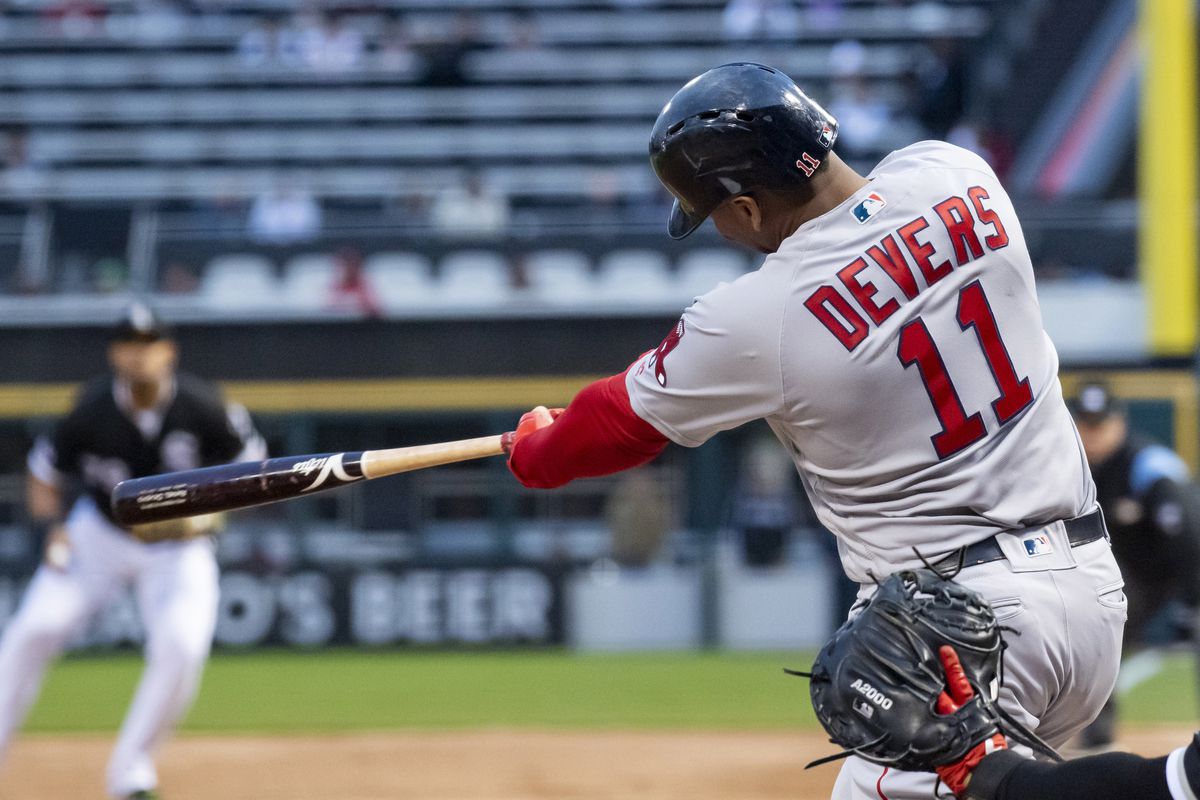
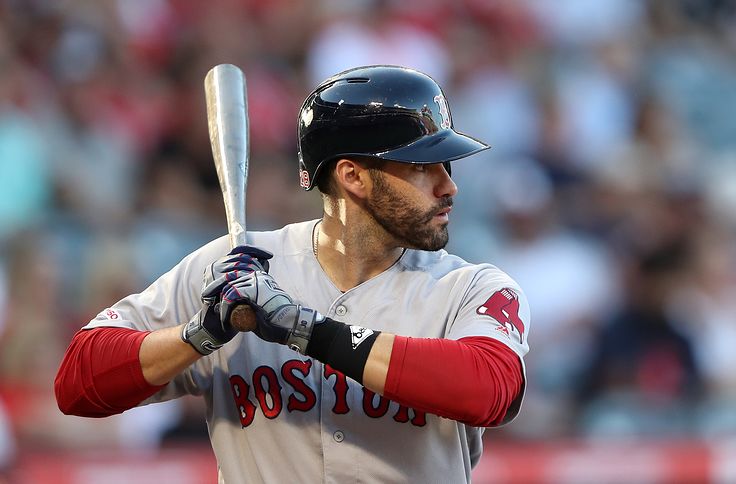
No one expected JD Martinez to slash an uncharacteristic .233/.315/.403/.718 this season or for Rafael Devers to take a huge step back by slashing .257/.310/.458/.768 or that Andrew Benintendi would barely look like major leaguer while slashing .103/.314/.128/.442.

In short, everything that could have gone wrong for the Red Sox this season has gone wrong. But this is an anomaly. Things will surely turn around next year (at least somewhat) and in the years ahead. The Red Sox will again become contenders, rather than laughing stocks.
As I’ve previously contended, John Henry and Tom Werner have proven that they will consistently put a winning team on the field in most seasons. Since that duo bought the Red Sox in Dec. 2001, they've been first, second or third in payroll for 14 of those 19 years. Moreover, they've been top-six in spending for every single one of them. They’ve earned the benefit of the doubt, if not our trust. By the way, Boston still has the third-highest payroll in baseball this season.

The Red Sox are a big-market team with lots of spending capacity and a history of utilizing it. We have every reason to believe — to expect — that ownership will open the checkbook and become free agent spenders once again. However, they need to do it judiciously; no more unwarranted spending on players like Carl Crawford, Pablo Sandoval, Hanley Ramirez, and Nathan Eovaldi.

If you’re expecting the Red Sox to make a big splash on a free-agent pitcher this offseason, don’t. There will be a dearth of available talent, highlighted by names such as Marcus Stroman, Mike Minor, Jake Odorizzi and Robbie Ray.

This rebuild may take a while, so be patient, Red Sox fans. Chaim Bloom has his work cut out for him. The Red Sox farm system is currently ranked No. 25 out of 30 teams by MLB.com. That’s why Bloom made an effort in recent deadline trades to secure minor league talent to round out that system.

In the meantime, we’re left wondering if this unwatchable Red Sox unit will avoid the ignominious distinction of becoming the worst Red Sox team of all time. Ugh.

Monday, August 24, 2020

The Red Sox Inability to Develop Starters Is Haunting Them

Nathan Eovaldi, who has a 4-3 record and a 5.49 ERA since the start of 2019, anchors the Red Sox' rotation.

The Red Sox have used 11 different starting pitchers this season, and they did so within their first 22 games, which is both mind-boggling and record-tying.

Boston has used the following pitchers to start games (so far) this year: Nathan Eovaldi, Martín Pérez, Colten Brewer, Ryan Brasier, Ryan Weber, Zack Godley, Austin Brice, Josh Osich, Matt Hall, Chris Mazza and Kyle Hart.

Only Eovaldi and Brasier were with Boston prior to last season; both joined the club in 2018.

Pérez signed a one-year, free-agent contract with the Red Sox in December. He had posted a 6.22 ERA with Texas in 2018 and a 5.22 ERA with Minnesota in 2019.

Brewer was obtained from the Padres for infielder Esteban Quiroz after the 2018 season. He had made just 11 relief appearances for San Diego, recording a 5.59 ERA in the process. Brewer was twice sent to Pawtucket during the 2019 season.

Weber signed a minor league contract with Boston in December 2018. He was previously waived by Atlanta, DFA'd by Seattle, and twice DFA'd by Tampa.

Godley signed a minor league deal with Boston in July of this year. He was previously DFA'd by Arizona and Toronto, and then released by Detroit.

Brice was acquired in January from the Marlins in exchange for minor league second baseman Angeudis Santos. Brice was previously waived by Cincinnati and the LA Angels, and then DFA'd by both Baltimore and Miami.

Osich was claimed off waivers last October. He had been previously DFA'd by San Francisco and Baltimore, and then waived by the White Sox.

Hall was obtained from Detroit in January for minor league catcher Jhon Nuñez. The Sox assigned him to Class-A Advanced Salem. Hall posted a 14.63 ERA over five appearances with Detroit in 2018 and a 7.71 ERA over 16 appearances in 2019.

Mazza was claimed off waivers in December and optioned to Class-A Advanced Salem. He had been released by both Minnesota and Miami, and was then DFA'd by the Mets.

Hart was drafted by the Red Sox in the 19th round of the 2016 draft. He is the only one of these 11 pitchers that was drafted and developed by the Red Sox.

None of the seven pitchers signed by Boston during the offseason or during this season provided any reasonable sense of hope or optimism. At best, they were long shots.

Eovaldi is the only one among this large group who was in Boston's starting rotation last season.

The losses of Chris Sale and Eduardo Rodriguez have been devastating to the Sox' rotation, to say nothing of the trade of David Price to the Dodgers. When any team is reduced to one-fifth of it’s previous season’s rotation, it is in big trouble or, at least, in big transition. 

Rick Porcello’s free agent departure to the Mets is a wash; the righty has gone 1-3, with a 5.76 ERA and 1.64 WHIP this season.

However, the Red Sox troubles aren’t solely related to the absences/losses of Sale, Rodriguez, Price and Porcello; they’re related to the organization’s decade-long failure to draft and develop successful starting pitchers. The last such pitcher was Clay Buchholz, who debuted all the way back in 2007.

The Red Sox inability in this regard has been both extraordinary and uncanny. This is why they've consistently resorted to signing costly free agents and trading valuable minor league talent to acquire big league pitchers through the years.

The rest of the Red Sox pitching staff is comprised by castoffs and reclamation projects.

Dylan Covey was obtained from Tampa in a July trade. He had a 6.96 ERA through 250 major league innings. Consequently, Covey was not on the Rays’ 40-man roster at the time of the trade.

Jeffrey Springs was obtained in a January trade with Texas in exchange for Sam Travis. The lefty had pitched 32 innings for the Rangers in each of the previous two seasons, posting a 4.89 ERA.

Robert Stock was claimed off waivers from the Phillies in July. At the time, Stock had a 4.11 ERA over 50 1/3 career innings as a reliever with the Padres from 2018-19. The righty, who was a second-round pick for the Cardinals in the 2009 draft, had stints in Mexico and independent baseball before making his big league debut in 2018.

Josh Taylor was acquired from Arizona in May 2018 as the "player to be named later" in the Deven Marrero trade. At the time, Taylor had been playing in Class A-Advanced.

Marcus Walden had been in the Toronto, Oakland and Minnesota organizations before signing with the Red Sox in December 2016. He made his big league debut with Boston in 2018.

Phillips Valdéz had been with the Cleveland, Washington, Texas and Seattle organizations before being claimed off waivers in February.

Is it any wonder that the Red Sox 5.89 staff ERA is the second-worst in baseball?

It’s also worth noting that the Red Sox still have the third-highest payroll in baseball this season. Clearly, they’re not getting a reasonable return on their investment.

The Red Sox are in the midst of a considerable rebuild or transition. We can assume that E-Rod will be back in the rotation next season, but Sale may not be back until mid-season. If Eovaldi and/or Pérez aren’t traded, Boston will still need two more reliable starters for its rotation next year.

It’s hard to imagine any of the pitchers mentioned above being one of them.

Among the Red Sox' top-ten prospects, according to MLB.com, five are pitchers: Bryan Mata (R), Noah Song (R), Jay Groome (L), Thad Ward (R) and Tanner Houck (R). Only Mata and Houck are advanced enough to potentially pitch in the majors next season. Yet, both remain entirely unproven at the major league level and could ultimately end up in the bullpen.

In other words, Boston still doesn’t have internal answers to its numerous pitching problems.

The failures of the Red Sox' pitching development program will continue to haunt them for at least the next few seasons.

Friday, August 14, 2020

Minor League Infielders Offer Intriguing Possibility for Red Sox


Since various minor leaguers have either being promoted to the majors or traded in recent years, the Red Sox farm system has been significantly depleted and now ranks 25th in baseball, according to MLB.com. The trade of Mookie Betts and David Price, however, helped to replenish the organization’s stock by returning middle infielder Jeter Downs and catcher Connor Wong.

Downs is now the Red Sox' No. 1 prospect, according to new rankings by MLB.com. He leapfrogged former No. 1 pick Triston Casas, a power-hitting first baseman who dropped to second place among the organization’s prospects.

The 20-year-old Casas, who was drafted in 2018, is an imposing 6-foot-4, 240-pound slugger who displays tremendous power from the left side. Casas was drafted as a third baseman, but, despite his strong arm, lacks range at the position. So, the Red Sox shifted him to the other side of the diamond. Though his major league arrival is projected for some time in 2022, a strong showing next season could lead to an expedited call-up.

First baseman Bobby Dalbec is the Sox No. 3 prospect. Listed at 6-foot-4, 227 pounds, the 25-year-old Dalbec also played third base in college and the minors. But with Rafael Devers' emergence as an All Star-caliber third baseman, the Sox have utilized Dalbec at first base in the minors, viewing him as the position's heir apparent next season.

It isn't likely that the Sox would platoon Dalbec and Casas at first base. However, since Dalbec also plays third, it raises an interesting possibility.

The Red Sox desperately need pitching for the 2021 season and beyond. They have Chris Sale under control through at least 2024 (2025 club option) and Nathan Eovaldi through 2022. Eduardo Rodriguez becomes a free agent after next season, unless he is extended. However, Sale and E-Rod are both suffering from health issues and their status for next season remains unclear. No matter, Boston's rotation desperately needs quality additions.

Free agency is always a gamble, especially with pitchers. Most of them don't become available until at least age 30, a time when their health often starts to falter. Moreover, the top free-agent pitchers in the coming offseason are Marcus Stroman, Mike Minor, Jake Odorizzi and Robbie Ray. Boston must do better than that.

The Red Sox need a dynamic young pitcher that they can control for years to come. To get that type of talent in a trade would require giving up an equally dynamic young talent. Enter Devers.

It wouldn't be surprise me if the Sox offer Devers as a trade chip for a young, controllable starter with top-of-the-rotation projectability. The presence of both Dalbec and Casas in their minor league system would allow it. Casas could man first, while Dalbec could shift back the hot corner at the big league level. The presence of both could more than make up for the loss of Devers' power.

It may seem outlandish at first, but Red Sox president and CEO Sam Kennedy recently indicated that the organization is open to trading anyone, if a deal can improve the club in both the near and long term.

“You look at this team and we still have a really young group of core players that you’d like to see with the Red Sox for a long, long time. We’d never label anyone untouchable, just given the fact that sometimes to re-tool and restructure for the future, you do have to sometimes make difficult decisions, as you saw with the Mookie [Betts] transaction. I don’t think anybody would be untouchable as it were, but there are certainly guys who have grown up in the system that we’d like to keep with the Sox for a long, long time.”

Wednesday, August 12, 2020

Assessing Jackie Bradley Jr.'s Trade and Free Agent Value


The conventional wisdom among the Boston media, and even among some fans, is that the Red Sox will be able to trade Jackie Bradley Jr. by the August 31 deadline, and that Bradley will then be able to score a hefty free agent contract in the upcoming offseason. An example from the Boston media today: "Bradley is on the way to making some serious money for himself." 

 I'm going to throw some cold water on these projections. 

First, let me say that I love Bradley as a person; he's a high-character guy, who always says and does the right thing. I don't think he's ever had a whiff of trouble while with the Red Sox. He’s the kind of person that every team wants on its roster. 

Then there's his Gold Glove-caliber defense and cannon-like arm. Defensively, there's no one else that I'd rather see patrolling center field at Fenway. 

However, there's also the issue of his offense… or lack thereof. Unfortunately, Bradley is like a black hole in the batting order. This season, JBJ is slashing just .224/.296/.265. Small sample, you say? Okay, let's take a broader view. 

Bradly is 30 years old and in his eighth major league season. Over that period, spanning more than 3,000 plate appearances, Bradley has slashed .235/.317/.407/.724. His batting average has declined in each of the last three seasons and this may be the fourth. For his efforts, he’s already collected over $30 million in career earnings. 

I don't think Bradley's offensive output will warrant any sort of decent return in a trade over the next two weeks, so don't hold your breath in anticipation. There's no top prospect coming back to Boston from another organization in a Bradley deal. 

Moreover, those are not the kind of numbers that will warrant a long-term, high-dollar contract in the offseason. Bradley will make a prorated portion of his $11 million salary this season, an amount he surely wouldn't merit on the open market. At best, he's worth about half that amount, and that doesn't take into consideration the new economic realities that MLB will be facing next year and beyond in the new COVID-19 era. 

Bradley will likely be available this offseason for something along the lines of a one-year deal for $5 million, with a second-year option. 

If the Red Sox can get a B-level minor league talent for him over the next two weeks, they should pull the trigger. And if they want Bradley back next year, he'll likely be available on team-friendly terms. 

However, the Sox may be preparing to hand the keys to promising young prospect Jarren Duran, who was the organization’s minor-league baserunner of the year in 2019. The 23-year-old could be an ideal replacement in center next season. 

After watching Duran belt two doubles and make two impressive catches in center field during a July summer-camp game at Fenway, Ron Roenicke came away very impressed by the speedy outfielder. 

“He’s an exciting player. We see his speed and the way he chases balls down in the outfield, and on the double he hit, how fast he got to second. He’s explosive, and we just hope all those tools continue to develop. He should be a really exciting player.”

One way or another, we're likely watching Jackie Bradley's final games in a Red Sox uniform. It's been fun watching him. He may be the greatest defensive center fielder in team history, Tris Speaker and Fred Lynn included. 

Monday, February 10, 2020

Facing Imperfect Situation, Red Sox May Have Done the Best They Could


Many Red Sox fans feel embittered that the big-market, big-spending BoSox traded Mookie Betts, rather than throwing an enormous sum of money (likely around $400 million) at him next offseason.

"Why the penny pinching?," some ask.

The Collective Bargaining Tax (CBT) threshold is $208 million this season; it will rise to $210 million next season. If a star player, like Betts, is paid “just" $35 million, he would occupy 1/6th of that team's payroll space, while the other 25 players get the remaining 5/6ths. That’s not really a wise allocation of resources -- even ample resources.

And then there's the wisdom (or lack thereof) of agreeing to a 10-12 deal with any player. Long term deals with star players always seem great... until they aren't.

When the Red Sox signed former Cy Young winner David Price to a seven-year deal in 2015, who thought they'd ultimately pay him $169 million to pitch a mere four years and then ask him to simply go away? The Sox will pay half of Price's salary for the next three years to pitch for the Dodgers.

When the Red Sox signed stalwart Dustin Pedroia to an eight-year extension in 2013, who imagined that he would play in a total of nine games from 2018-2019, and perhaps be unable to play at all over the final two years of the deal? In essence, the Sox got four years from Pedroia, but will pay him for eight.

These are just two recent examples; the list goes on and on across baseball.

It's easy for fans to complain about how owners spend their money and to be resentful when those owners refuse to hand out high-dollar, long-term contracts. In some cases, such complaints are warranted. In this case, they’re not.

Quite predictably, some fans are complaining that John Henry and Tom Werner are cheap. It's simply untrue.

Since that duo bought the Red Sox in Dec. 2001, they've been first, second or third in payroll for 13 of those 18 years. Moreover, they've been top-six in spending for every one of those 18 years.

Red Sox fans are lucky to have such a committed ownership group. Yet, many of us have become accustomed to this generous spending and now take it for granted. Other sports teams face legitimate spending limitations every season and their fans naturally feel aggrieved. Red Sox fans don't share these concerns, yet we've become jaded anyway.

Some argue that, even at 50%, paying the luxury tax penalty is a paltry sum for uber-rich owners like Henry and Werner.

However, the punishment is steeper than that.

By going over the CBT for the third consecutive year, the Red Sox would have exposed themselves to greater draft and international penalties for signing free agents, lesser draft-pick compensation in exchange for departing free agents, and they would have seen reduced revenue-sharing rebates. All of this needs to be considered. It's not a matter of cheapness and money saving; it's about being able to reinvest next year and beyond in order to build a sustainable on-field product.

As Alex Speier of The Boston Globe wrote back in December: “If the Sox scale back their payroll to $205 million next season before returning to 2019 level of $243.5 million in 2021 and 2022, they could save a total of $90 million to $100 million over the next three years.”

That’s not chump change. Take it all into consideration and it's easier to understand why the Red Sox traded Betts and Price.

Remember, the Sox weren't dealing from a position of strength. How many teams have the revenue to absorb the $43 million in 2020 payroll the Dodgers just took on?

Moreover, Price is 34 and didn't live up to the first four years of his contract; the next three years aren’t going to get better for a pitcher who posted a career-low 92 mph average fastball velocity in 2019.

Lastly, as great as Mookie is, the Sox were dealing a player who will make $27 million this season and comes with just one year of club control; he’s the classic one-year rental, and a very expensive one at that.

Collectively, this was all a tough sell for Chaim Bloom and the Red Sox. Perhaps, they did the very best they could, given the circumstances.

Wednesday, February 05, 2020

Was the (David) Price Right for Mookie Betts?


After last night’s blockbuster trade of former MVP Mookie Betts and former Cy Young winner David Price, Red Sox Nation is likely feeling a bit shocked. Everyone is surely asking, "Is this really the best the Red Sox could do?"

This appears to be a straight-up salary dump by Boston, which is very unusual for the club. Most of us aren’t accustomed to this.

By giving up their best all-around player (and one of the very best in the game), as well as their No. 2/No. 3 starter, the Red Sox seem to be writing off the 2020 season. At the least, this deal won't make Boston more competitive in the coming season.

But, look at it this way: the Sox finished in third place and missed the playoffs last year -- with Betts and Price. They can likely do the same again without them this year and save a lot of money in the process, while getting under the CBT. If the Sox kept Betts until the end of this season and gave him a qualifying offer, which he’d quickly reject, they'd only get a compensation pick when Betts walked. Alex Verdugo is a major league-ready talent, so he's worth far more than a compensation pick, who might take four or five years to get to the majors — if he ever makes it at all.

Verdugo became a full-time player with the Dodgers in 2019, playing in 106 games and getting 343 at bats. In that span, he slashed .282/.335/.449/.784 with 28 doubles, 14 homers and 49 RBI. The Sox surely like the fact that he comes with five years of team control.

Former Red Sox Lou Merloni reported that Boston offered Betts a 10-year, $300 million contract extension following the 2018 season. Betts countered with 12 years and $420 million and the deal fell apart. In other words, the two sides were miles apart and there was no bridging that gap.

As history shows, no player is worth a 10-year investment, much less a 12-year investment. The Sox were wise to walk away from the bargaining table. Six years from now, this will seem like a wise move. Remember, just four years ago, Sox' fans were thrilled when Price signed a seven-year deal. Oh, how the times have changed. Long-term contracts have a way of doing that.

So, what about Price?

ESPN’s Buster Olney reported that front offices in baseball told him if Price were a free agent, he would only be worth a one-year, $12 million deal, or two years at $18 million, because of his elbow issues. Everyone in baseball now has the same analytical information; almost all of them arrive at the same evaluations and conclusions these days. The Red Sox weren’t about to con anyone about Price’s value.

The Red Sox and their fans have to accept that Price’s seven-year, $217 million contract was a bad one from the start. He never lived up to it for the first four years (the 2018 World Series notwithstanding), and things aren’t going to get better over the next three. It was a mistake, and now the Sox are at least halfway free of the remaining obligation; they're picking up about half of the remaining $96 million on his contract.

Ultimately, after paying the Dodgers for the next three seasons, the Red Sox will have given Price a whopping $172 million for four years of service and one World Series Championship. It's a steep price and fans can argue over that value. But it makes Price's wearying tenure all the more bitter.

That isn’t to say Price was a bust. He posted a 46-24 record and 3.84 ERA in 103 appearances (98 starts) over four seasons. That’s not bad, but it's just not worthy of $32 million per season either. Oh, and Price never made an All Star team or earned even a single Cy Young vote while with Boston.

By the way, Price was set to earn 10/5 trade rights after this season, making this an ideal time, perhaps the only time, to trade him. If Price gets injured or is ineffective leading up to the trade deadline, the Sox will have dodged a bullet.

However, if Price excels in LA, every Sox fan will say, "Why can't we get guys like that?" Or, "We got fleeced!"

Yes, it’s a real bummer that the Red Sox will pay the Dodgers $16 million in each of the next three seasons to have Price pitch in LA. But the Sox might have found a diamond in Brusdar Graterol (what a name!); the righty throws a 101 mph sinker. The Red Sox prospect list has just been updated and Graterol is the new No. 1 prospect in Boston's system, according to FanGraphs. He just might be the Sox' fifth starter this season.

Despite paying the Dodgers half of Price's salary, in one fell swoop, the Red Sox have lopped $43 million from this year's payroll. That will give them lots of flexibility at the July deadline, next season and beyond. If they’re over-performing at midsummer, it gives them the ability to take on a player with a big contract.

Yes, it's a shame that the Sox didn't pull off this deal back in December, when many of the top free agents were still available. Imagine what the Sox could have done with the savings back then. But, as I've said previously, this deal is about taking a step back in 2020 in order to take two steps ahead in 2021 and beyond.

In case you're wondering why the Red Sox didn't make a deal with San Diego, consider this: the Padres wanted the Red Sox to take Wil Myers and pay half of his $68 million contract. Meyers is 29 years old. Over the course of his seven-year career, he's averaged a 1.39 WAR each season. Over his last three full seasons, he's averaged 169 strikeouts.

Since winning the 2013 American League Rookie of the Year Award, Meyers has failed to bat above .259 or compile an .800 OPS. That's a span of six seasons. In other words, he has never realized his promise or lived up to all the hype.

That's the guy the Padres wanted the Red Sox to accept... for Mookie Betts. Oh, and Meyers’ regrettable contract still has three years remaining.

There are only so many teams that could afford Betts' $27 million salary and even fewer that were willing to rent him for just one year with no guarantee that he’ll return in 2021. The Dodgers are one of the limited few with that capacity.

And the Dodgers were one of the few teams that was also willing and able to take on half of Price’s burdensome contract…all in the name of landing Betts, so that they can make one great World Series push and try to finally put their post-season woes behind them.

Thursday, January 23, 2020

Red Sox Need to Think of 2021 and Beyond


The Red Sox need David Price and Mookie Betts to be competitive in 2020. Yet, the team may need to trade them both to be competitive in 2021 and beyond.

It's late January and the Red Sox have been unusually quiet on the free agent and trade fronts, unless you are inspired by the additions of Kevin Plawecki, Martin Perez and Jose Peraza.

With his hands tied by a payroll that remains about $27 million over the CBT threshold, Chaim Bloom has done nothing to improve an underperforming team -- at least as of yet.

Bloom is telling other teams that the cost of acquiring superstar Mookie Betts is taking on all or most of the $96 million owed to 34-year-old David Price, while also sending the Red Sox two top prospects. That’s according to ESPN’s Buster Olney.

Betts will make $27 million this season, and he surely expects his next contract to pay him at least $30 million per year for the next decade.

Unless the Red Sox can somehow unload Price, they can't likely afford to pay Betts next season or the following two years.

Why?

Price will make $32 million in each of the next three years, while Chris Sale will make $30 million in each of the next three years.

How many $30 million players can any team -- even a big market club like Boston -- bear?

Can the Red Sox really afford to have over $90 million dollars invested in just three players on an annual basis? My sense is no. It's just bad business.

At this moment, the 2020 team is largely the same group that won just 84 games and missed the playoffs last season. Yet, it's also mostly the same group that won the World Series the year before.

If ownership/management sense that this team is more like the former than the latter, then why not unload Betts and Price and reset the luxury tax?

The reality is this team has no shot in 2020, unless Chris Sale is fully healthy and pitching at a Cy Young level. Based on last year, that doesn't seem like a reasonable expectation.

If the Red Sox are able to unload Price with Betts, and get two top prospects, that's a deal they need to make. It's time to build for the future -- 2021 and beyond.

Hello, Dodgers?

Monday, December 30, 2019

Red Sox' Brandon Workman Might Be Bullpen's Secret Weapon


Though the Red Sox have yet to name a closer for the 2020 season, Brandon Workman is an obvious choice.

Following the struggles of Matt Barnes (4/12 in save opportunities) and Ryan Brasier (4.85 ERA), Workman didn't take over as Boston's closer until August of last season. Yet, he made quite a statement all year long out of the Boston pen. The 31-year-old posted a 1.88 ERA over 71.2 innings, which just begins to tell the story. Workman allowed a mere 29 hits, the second fewest among qualifying relievers in Red Sox history.

In fact, the righty ranked near or at the top of nearly every statistical category for big league relievers. Workman held opponents to a .123 batting average in 2019 (29-for-235), which is the lowest mark for any pitcher since 1900 (min. 60.0 IP). His .166 opponents' slugging percentage is the lowest in the expansion era (1961-2019).

Consider that for a moment; those two statistics are amazing.

Though he may be due for a regression in 2020, Workman's 2019 numbers were spectacular. The one concern was his inflated walk rate, which reached a career-high 5.7 BB/9.

Workman is by now one of the longest-tenured members of the Red Sox, having pitched in the 2013 World Series. He threw a perfect 8th inning in the decisive Game 6, setting up closer Koji Uehara.

You may have forgotten how Boston ended up with Workman in the first place. The Red Sox drafted him in the second round (57th overall pick) of the 2010 MLB draft; he was a compensation pick from the Mets for signing free agent Jason Bay.

So, a decade a later, the decision to let Bay walk is still paying dividends for the Red Sox. By the way, Bay has been out of the majors since 2013 and his career went into a tailspin following his breakout 2009 season with Boston.

Meanwhile, Workman just quietly posted a historic season as a reliever for the Red Sox.

Sunday, November 17, 2019

Why the Red Sox Will Deal Mookie Betts


The Red Sox find themselves in a quandary this offseason. After having the highest payroll in the game for two consecutive years (the latter of which resulted in a third-place finish in 2019), ownership has stated its objective to lower the club’s payroll below the $208 million Competitive Balance Tax (CBT) threshold next season.

As it stands, the team has a projected payroll of $230 million next season (according to Fan Graphs), which means that roughly $22 million will somehow need to be shaved off to meet ownership’s objective.

This has led to the notion that the Sox may seek to trade Jackie Bradley Jr. this offseason. The center fielder is projected by MLB Trade Rumors to get $11 million in arbitration, a sum that surely outstrips his actual value. However, even if the Sox trade Bradley, they would still be about $11 million above the CBT. And then the Sox would need to replace Bradley, which would require an outlay to his successor. Perhaps the Sox can find a replacement for half the cost of Bradley, but that would make it even more difficult to get below the CBT.

Also, keep in mind that the Sox still need to find a fifth starter to replace Rick Porcello, who will most likely depart as a free agent. Though the team will surely experience a savings from Porcello’s $21 million annual salary, the entire $21 million won’t be eliminated since the Sox will still need to pay another starter.

The most obvious solution would be to trade Mookie Betts, who is projected by MLB Trade Rumors to receive $27.7 million in arbitration for the 2020 season.

Though the notion of trading the former MVP is heresy across Red Sox Nation, Betts has repeatedly insisted that he is determined to find his true market value in free agency next year. Though the Red Sox have previously tried to engage Betts’ in contract negotiations, to no avail, management has stated they will try once again this winter. It may be a last stand.

Betts admitted that he rejected an offer from the Red Sox following the 2017 season, which Joel Sherman of the New York Post reported was an eight-year, $200 million proposal. Betts will likely use Bryce Harper’s 13-year, $330 million contract and Mike Trout’s 12-year, $430 million extension as the parameters for his pending deal.

Betts may be better than Harper, but he is undoubtedly inferior to Trout, who isn’t merely the best player of his generation, but one of the greatest players of all time. Even if the Red Sox get Betts to agree to a 10-year contract, for whatever amount, its reasonable to ask if this is the best allocation of precious resources. Though Betts just turned 27 in October and is in the prime of his career, contracts of such length almost never turn out to be wise investments for the teams that agree to them.

Remember, a 10-year deal would pay Betts through his age-37 season. For comparison, Dustin Pedroia is 36 and has appeared in just nine games over the past two seasons; that was unimaginable when he signed his extension.

Consider the Red Sox history with long-term deals, which, for argument’s sake, I will refer to as any deal of at least five years in length. The following contracts are listed in total dollar value:

David Price - seven years, $217 million in 2015

Chris Sale - five years, $145 million in 2019

Carl Crawford - seven years, $142 million in 2010

Dustin Pedroia - eight years, $110 million in 2013

Daisuke Matsuzaka - six years, $52 million, plus $51 million posting fee (total = $103 million) in 2006

Pablo Sandoval - five years, $95 million in 2014

Rusney Castillo - seven years, $72.5 million in 2014

Nathan Eovaldi - four years, $68 million in 2018

Does anyone think that the Red Sox, in retrospect, would sign any of those contracts today? I think the clear answer is no. The team has been burned time after time. The Manny Ramirez deal (eight years, $160 million) was the only long-term pact that delivered true value.

The reality is that almost any contract of more than five years ultimately proves to be a mistake; teams are always paying for past performance.

John Henry and Tom Werner may reason that the Red Sox, with Betts leading the way, still finished in third place last season. Given their budget ambitions, there is no basis to argue that the Red Sox will markedly improve this winter or that the Yankees will regress. The Sox may be battling for second or third place once again, which ownership may rightly argue they can also do without Betts.

If Betts leaves as a free agent next offseason, the Red Sox would only get one compensation draft pick. If they trade him now, however, they might get as many as three proven prospects -- perhaps a team's top-five prospect, another top-10 prospect and a top-20 prospect.

Betts is undoubtedly a dynamic player, who possesses true five-tool ability. He is highly popular in New England, and for good reason. Yet, it’s a virtual certainty that whichever team signs Betts to his next contract will overpay and commit far too many years.

As I've argued previously, long-term contracts are bad for baseball — at least for the teams that sign them.

As it stands, the Red Sox will have five players on their roster making at least $20 million next season, three making at least $25 million and two making at least $30 million.

David Price - $32M
Chris Sale - $30M
Mookie Betts - arb estimate ~$27M
JD Martinez - $23.75M
Xander Bogaerts - $20M

Betts' next contract will almost certainly pay him at least $30 million annually. The big question is, how many $30 million contracts can one team carry -- even a big-market club like Boston?

My thinking is that the Red Sox will have at least one too many, no matter what.

Tuesday, November 05, 2019

How Will the Red Sox Reduce Payroll, While Remaining Competitive?


JD Martinez will be back with the Red Sox next season, which is both good news and bad news for the payroll-heavy club.

With JD Martinez choosing not to opt out of his 2020 contract, the Red Sox payroll now sits at ~$227.23 million, at a time when ownership has publicly stated its intention to get under the $208 million luxury tax threshold.

The organization will now have to seek alternative means to reduce payroll and, subsequently, its tax penalty.

Martinez's return next year will be great for the offense and will make Alex Cora's life easier, but it will also create great challenges for new vice president of baseball operations, Chaim Bloom.

Boston has a number of highly paid (or overpaid) players on its roster, which will make filling holes and building the 2020 team more difficult.

Red Sox Highest 2020 Salaries

David Price - $32M
Chris Sale - $30M
Mookie Betts - arb estimate ~$27M
JD Martinez - $23.75M
Xander Bogaerts - $20M
Nathan Eovaldi - $17M
Dustin Pedroia - $13M (may not play in 2020)
Jackie Bradley - arb estimate ~$11M

It's overly simplistic to say, "Just trade Price!" Saying that is easy; executing it is much more difficult. Everyone in baseball is aware of Price's age (34) injury history and health status. The Sox would likely pay another club about $10 million to have Price pitch for them. The wiser choice would be to keep him and hope for the best (30 starts, 200 innings, 3.50-4.00 ERA).

The Red Sox have $79 million committed to Price, Sale and Eovaldi for next season, which is extraordinary for just three pitchers. Though Boston may have (thankfully) shed Rick Porcello’s $21 million salary, they still need to replace him and there is no one in the minors ready to step up. That will necessitate finding an affordable free agent or making a trade, which comes with its own costs.

One distinct possibility for lowering payroll would be granting Jackie Bradley his arbitration award and then trading him. Bradley was worth just two wins above replacement last season, which is certainly a number that another outfielder could provide for a lot less money. Surely, the Red Sox love JBJ's glove and arm, but he has continually been an offensive under-performer since arriving in the majors in 2013. Bradley made $8.55 million last season and it's hard to argue that he's worth any sum above that. It's worth considering that the average MLB salary last season was $4.36 million.

It’s also worth noting that the Sox don’t necessarily need to find another center fielder to replace JBJ, since both Betts and Andrew Benintendi can fill that void. Adding a corner outfielder may be easier and more likely. In 2018 (the most recent year I could find data), right fielders earned an average salary of $5.2 million, with a median income of $3 million.

I don’t believe the Red Sox will trade Betts and I wouldn't advocate it. He is a fan favorite and a perennial MVP candidate. I think the team values him too much to trade him away. They are a big-market club and the owner has deep pockets. The Red Sox don't necessarily need to be the top bidder next year; they just have to be "in the ballpark.” Betts' loyalties to the organization, to Boston and the fans may be the ultimate determinant.

Whatever the team does to lower its current $227 million payroll to its stated objective of $208 million will be fascinating to witness. Such moves will require great creativity and, perhaps, some risks.

Chaim Bloom is now facing that challenge, yet he seems like a man who is up to the task. Surely, he knows how to do more with less. The Rays' payroll last season was $89.9 million, while the Red Sox' tab was $241.7 million.

Meanwhile, the Rays won 96 games and made the playoffs, while the Sox won just 84. Clearly, spending big money doesn't guarantee wins, and Bloom proved this.