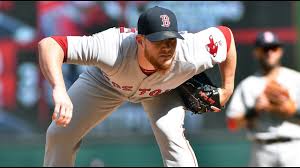
Monday, September 30, 2019

Red Sox Will Be In Transition This Offseason


The Red Sox ended the 2019 season with a payroll totaling $241.7 million, the highest in baseball for the second-consecutive season. Despite their massive payroll, the Sox finished with an 84-78 record, good enough for third place in the AL East.

That’s surely not what ownership had in mind, nor the fans or the media.

The Sox ownership group has stated its goal heading into 2020 is to cut payroll to under $208 million. That's a reduction of more than $33 million.

Something's got to give. Clearly, the team won't be a big player in the free agent market this offseason. Additionally, some of the Sox' free agents will be allowed to walk, with no bidding by Boston.

Rick Porcello will not be back, which will save the club $21 million. Through five seasons with Boston, Porcello went 73-55, with a 4.43 ERA and 1.27 WHIP over 159 starts. Just twice did he reach 200 innings. For that, he was paid $95 million. Porcello was expected to be a solid No. 2 starter, but, with the exception of 2016, never lived up to that billing.

Mitch Moreland, who earned $6.5 million this season, will become a free agent and the Sox will likely say goodbye. Though he was a solid contributor both offensively and defensively, and is well-liked by his teammates, Moreland produced a 1.3 WAR this season, meaning he is replaceable for less money.

Steve Pearce, whose 2019 salary was $6.25 million, won't be back. We’ll always thank him for his 2018 post-season heroics.

By letting Porcello, Moreland and Pearce walk away, the Sox would save $33.75 million, which may solve their payroll problem.

However, they'll still need to replace those players. Perhaps the Sox view Michael Chavis as an able, and much cheaper, replacement for Moreland at first base.

How the club replaces Porcello is unknown. There is no starter in the minor league system that's prepared to take a rotation spot next season. The Sox haven’t successfully developed a major league pitcher since Clay Buchholz debuted in 2007, and his career was dicey. That’s a systemic problem. Once viewed as a potential starter, Darwinzon Hernandez is now viewed as a solid bullpen contributor.

The Sox released Eduardo Nunez earlier this season. His $4 million salary also comes off the books this offseason.

However, Brock Holt becomes eligible for free agency for first time this offseason. The Sox likely want him back and he will get a nice bump from his $3.575 million salary in 2019. The 31-year-old will probably get a three-year deal of $6-$8 million annually.

If JD Martinez opts out, the Sox may let him walk. He is due $23.75 million next season. Despite all he provides in terms of offense, Martinez is one of four Red Sox (David Price, Chris Sale, Mookie Betts) scheduled to make over $20 million next season. On top of that, the team does not view him as an everyday outfielder.

The Sox will likely make yet another overture to Betts, who has thus far insisted that he will find his market value in free agency next year. He will get a big bump in arbitration this winter. The Sox may have to decide on whether they can retain either Martinez or Betts, but it will be a gamble. The Sox might entertain the thought of trading Betts, rather than risk losing him for a mere draft pick a year from now.

Jackie Bradley had the lowest batting average (.225) of any center fielder to qualify for the batting title this year. Additionally, JBJ’s .738 OPS ranks ninth among the 14 center fielders who qualify, and that was his best mark over the past three seasons.

Bradley, however, is perhaps the best defensive center fielder in the game. The question is, how much value do the Red Sox place on that?

Bradley is eligible for free agency after the 2020 season and will likely make about $10 million in his final year of arbitration. If the Red Sox feel they can replicate his production for less money, the payroll-heavy club may seek to trade him this offseason. If no deal materializes, it’s possible that the club could even non-tender Bradley, though that may seem outlandish.

It’s worth noting that Andrew Benintendi and Betts can both play center.

In the unlikely event that the Sox can find a trade partner for Price, they'll deal him away. At age 34, his best years are well behind him and his contract is now an albatross. That’s precisely why no club will take Price unless the Sox pick up a hefty portion of his pact. They may be better off just keeping him.

One way or another, Boston's roster -- which is essentially the same group that won 108 games and the World Series in 2018 —will look quite a bit different when spring training opens next February.

Monday, August 19, 2019

Rafael Devers Chasing History


Rafael Devers had two more doubles on Sunday, giving him an MLB-best 46 this season. The third baseman is on pace to easily eclipse 50 two-baggers this year, a feat accomplished just eight times in the Red Sox' 119-year history.

Incredibly, the club record for doubles in a single season is also the Major League record. Red Sox outfielder Earl Webb hit an astounding 67 doubles in 1931. Webb posted freakish output that season, which proved to be an outlier, as his next highest total was a mere 30 doubles.

Here’s the list of Red Sox players who’ve hit 50 or more doubles in a season. It's quite short and reads like a who’s who list of Sox greats:

Earl Webb - 67 (1931) (MLB Record)
Nomar Garciaparra - 56 (2002)
Tris Speaker - 53 (1912)
David Ortiz - 52 (2007)
Nomar Garciaparra - 51 (2000)
Wade Boggs - 51 (1989)
Joe Cronin - 51 (1938)
Dustin Pedroia - 54 (2008)

Fourteen different Red Sox have led the American League in doubles, with several multiple-time winners. Carl Yastrzemski captured the doubles title three times and holds the team career record of 645 – well ahead of the 525 registered by Ted Williams. Williams twice led the AL in doubles with back-to-back titles in 1948 and 1949.

Most incredibly, Devers even has a shot at 60 doubles this season, an exceptionally rare feat. Just six players in Major League history have ever reached that threshold, and five of them did it in the 1930s. Most recently, two players reached the mark way back in 1936.

60-Double Seasons in MLB History

67: Earl Webb, 1931 Red Sox
64: Joe Medwick, 1936 Cardinals
64: George Burns, 1926 Indians
63: Hank Greenberg, 1934 Tigers
62: Paul Waner, 1932 Pirates
60: Charlie Gehringer, 1936 Tigers

Only eight players this century have reached even 55 doubles in a season, reinforcing how rare the accomplishment is.

Devers certainly has a shot at 55 and perhaps even 60. So, even if the Red Sox prove to be less than inspiring down the stretch, Devers’ chase certainly will be most interesting to watch.

Saturday, June 29, 2019

Why Does Mookie Betts Suddenly Look Ordinary?


The Red Sox reached the midway point of the 2019 season at 44-37 or seven games over .500, which put them on pace for an 88-74 record this year.

By this point, we all finally recognize that this team is not as good as last year's, even though it remains mostly the same. This was somewhat expected since the 2018 team won 108 games in the regular season and 11 more in the playoffs. That's a tough act to follow.

The Red Sox struggles this season are mirrored by their best player, Mookie Betts.

Betts set the bar so high last year that a slight decline in performance was to be expected this year. However, Betts' stats have fallen precipitously in 2019.

The center fielder's batting average is down 85 points to .261, his OBP is down 59 points to .379 and his slugging percentage is down almost 200 points, plummeting from .640 to .459.

However, as Alex Speier points out, Betts is actually walking at a higher rate this year and striking out at a slightly lower rate than last year, when he was already among the best both categories. So what gives?

Speier notes that Betts is pulling the ball less this season, falling from 47.8 percent to 43.6 percent, which may account for some of the falloff. Because Betts isn't a natural power hitter, he needs to pull the ball to generate home runs. Balls hit the other way often result in outs for Betts.

After the breathtaking season Betts had in 2018, pitchers have made an adjustment and are attacking him down and away. He knows it and hitting coach Tim Hyers knows it. Hyers says that Betts even anticipates this.

The question at this point in the season is why hasn’t he been able to make the necessary adjustments of his own? Betts had a fantastic 2016 season, but a rather ordinary 2017. Then he had his historical MVP run last year. In other words, he’s been on and off from year to year.

That may hurt him in free agency after next season, unless he produces another even-numbered-year explosion in 2020.

Betts still has time to adjust, but this season is already past the halfway mark. In other words, time is short for the former MVP... and for the Red Sox, who rely on him so much.

Monday, May 13, 2019

When the Red Sox Bet on Wade Boggs Over Carney Lansford


When the Red Sox obtained Carney Lansford from the Angels after the 1980 season, it appeared that the 23-year old would be a mainstay in the Boston lineup for years to come. The California native had played three solid seasons for the Angels and finished third in the 1978 AL Rookie of the Year vote.

Lansford manned the hot corner for the Red Sox during the strike-shortened 1981 season, a year in which he won the batting title with a .336 average. Lansford also won his lone Silver Slugger that season, though he had just 4 homers, 23 doubles and 52 RBI over 102 games.

The very next year, 1982, Wade Boggs made his debut in Boston and the Red Sox suddenly had a logjam at third base. That season, Lansford played 114 games at third and was the DH in 14 contests. Consequently, Boggs ended up playing more games at first base (49) than at third (44), even though he was a natural third baseman. Someone had to go.

The Red Sox, rightfully, saw more upside in the 24-year-old Boggs than the 25-year-old Lansford. So, during the 1982 off-season, Boston sent Lansford to Oakland in exchange for Tony Armas, in what turned out to be a great deal for Boston.

Armas placed second in the AL with 36 home runs in 1983 and in 1984 led the AL with 43 HR, 123 RBI, 77 extra-base hits and 339 total bases. From 1980 to 1985, Armas hit more homers (187) than any other AL player.

At the time Lansford was traded, many Red Sox fans (myself included), couldn’t believe that the team would swap a player who had batted .301 and .336 over the preceding two seasons. Lansford just seemed too good to deal away.

Yet, while Lansford was always a good player, I had somehow perceived him as being a lot better than he really was. Though I had long thought of Lansford as a great player, it turns out that he was just a good one, which is perfectly respectable. For perspective, Lansford was an All Star just once (1988) in his 15 seasons.

Though Lansford was a career .290 hitter, which is pretty sweet, he was mostly a singles hitter, absent the power of a typical corner infielder.

Lansford hit 151 career homers and popped a career high of 19 in three seasons. He hit 30 doubles just three times and topped out at 31. As a result, he had a .411 career slugging percentage, which is pretty weak. Not once did he slug .500. He also topped out at 80 RBI in 1980 and in most years knocked in about 45-65 runs. He just wasn't a significant run-producer.

But defense matters, right?

Well, Lansford never won a Gold Glove, so he wasn’t considered an elite defender. Yet, he posted a .966 career fielding percentage as a third baseman, while the league average at that position was .951. Lansford also swiped 224 bases over his career and stole at least 20 in five seasons.

All in all, Carney Lansford was a very good player, but not a great one, as I once believed. There’s nothing wrong with that. He played in three World Series with the A's, losing in 1988 and 1990 and winning in 1989.

But, in retrospect, the Red Sox clearly did the right thing in betting on Boggs over Lansford after his two solid seasons in Boston, and in receiving Armas in exchange for him.

Thursday, April 11, 2019

How Much do Home Runs Really Matter to Red Sox?


The Red Sox have long been viewed a power hitting organization, perhaps due to the confines of Fenway Park. For decades, the Sox constructed a roster of sluggers and rarely stole bases. In short, they’ve never really been a “small ball” club.

Yet, while 18 MLB teams have hit at least 240 home runs in a single season, the Red Sox are not one of them. The 2003 team set a club record with 238.

In fact, the Sox haven't really lived up to their reputation as a power-hitting team in this century, belting at least 200 homers in just seven of 19 seasons. Yet, home runs only matter if you win games.

So what’s the Red Sox' power output been worth? How was their record reflected in the total number of home runs they hit each year this century?

YEAR - HR - Wins
2018 - 208 - 108 (World Series Champions)
2017 - 168 - 93
2016 - 208 -93
2015 - 161 - 78
2014 - 123 - 71
2013 - 178 - 97 (World Series Champions)
2012 - 165 - 69
2011 - 203 - 90
2010 - 211 - 89
2009 - 212 - 95
2008 - 173 - 95
2007 - 166 - 96 (World Series Champions)
2006 - 192 - 86
2005 - 199 - 95
2004 - 222 - 98 (World Series Champions)
2003 - 238 - 95 (club record)
2002 - 177 - 93
2001 - 198 - 82
2000 - 167 - 85

The Red Sox have won four World Series this century -- more than any other organization. In an era dominated by the long ball, only two of those teams hit at least 200 home runs. This is a reminder that pitching and defense really matter.

The Yankees hit a MLB-record 266 homers in 2018, yet didn't reach the World Series. In fact, they didn't even reach the ALCS.

Take a look at the top-10 most prolific home run-hitting teams in baseball history. Their results weren’t very good. It’s also worth noting that seven of the top-10 home run clubs were from this century and all have been since 1996.

2018 Yankees (266) - eliminated in ALDS
1997 Mariners (264) - eliminated in ALDS
2005 Rangers (260) - 3rd in AL West
2010 Blue Jays (257) - 4th in AL East
1996 Orioles (257) - 2nd in AL East
2016 Orioles (253) - tied for 2nd in AL East
2000 Astros (249) - 4th in AL Central
2001 Rangers (246) - 4th in AL West
2012 Yankees (245) - eliminated in ALCS
1996 Mariners (245) - 2nd in AL West

So, while we may expect the Red Sox to be a team of sluggers, and among the leaders in home runs, the reality is quite different — and it hasn’t really mattered either.

Only 11 teams the Red Sox' 118-year history hit at least 200 home runs (two in the 1970s, two in the 1990s and six this century). Just two of them went on to win the World Series.

That’s worth remembering this season and in the years ahead.

Tuesday, March 19, 2019

Dustin Pedroia's Winter of Discontent Continues


In October 2016, Dustin Pedroia had surgery to repair a torn meniscus in his left knee and spent the offseason recovering. Then Manny Machado spiked Pedroia at second base in April, 2017 and his left knee has never been the same.

After playing through discomfort and being limited to just 105 games that season, Pedroia had a cartilage restoration procedure on his left knee that November. The surgery involved grafting cartilage from a cadaver to fit into the damaged area.

Nearly a year-and-a-half later, Pedroia still isn’t fully healed and will begin yet another season on the disabled list.

The Red Sox initially believed that Pedroia would be able to play most of the 2018 season. That proved to be wildly optimistic. After missing the first two months, Pedroia returned on May 26, only to be put back on the DL after just three games. Despite the advanced surgical technique, the second baseman was again sidelined after just 11 at-bats.

Following that disappointing outcome, Pedroia underwent arthroscopic surgery on the same knee at the end of May, which uncovered scar tissue as the root of the problem. He then underwent a second arthroscopic procedure last August.

That amounted to a total of three knee surgeries in just 10 months and four in 26 months. Pedroia says he now has reservations about the original cartilage restoration procedure.

"No, I wouldn't have done it,” he said recently. "I don't regret doing it, but looking back and knowing what I know now, I wouldn't have done it,”

No position player has ever undergone the cartilage restoration surgery Pedroia endured, so there is no template for his recovery. However, one pitcher who had the procedure happens to be one of Pedroia’s teammates.

Steven Wright underwent the same surgery on his left knee in May of 2017, yet recently admitted, “I don’t think I’m ever going to feel 100 percent like I did before I hurt my knee."

That's got to be of great concern to the Red Sox and Pedroia. As a second baseman and a hitter, Pedroia needs more mobility and agility than Wright. His defense has always been well above average. In fact, he is the first Red Sox infielder to win four Gold Gloves. All of that is now at risk.

There's a good chance that Pedroia, like Wright, will never fully recover and return to being the star player he once was. That's worrisome.

The 35-year-old has three seasons remaining on his contract and is owed $40 million over that span. His eight-year, $110 million pact continues through his age-37 season.

Pedroia remained productive throughout his early 30s, slashing .296/.360/.415 over 2,195 plate appearances from 2014-2017. But he’s been limited to just 108 games over the last two seasons and faces nothing but questions about his future as he begins yet another season on the DL.

Though we may not have seen the last of Pedroia, we’ve likely see the best of him.

This isn’t what anyone imagined just a couple of years ago, least of all Pedroia himself.

Tuesday, March 05, 2019

Remembering Fred Lynn, the 1975 AL MVP and Rookie of the Year


The former defensive standout and batting champion has fond memories of his 16 years in the Major Leagues

The following is an interview I did with Fred Lynn in 2002. It originally ran in Baseball Digest.

In November 2001, following a phenomenal debut season, Seattle Mariners’ right fielder Ichiro Suzuki was named both Rookie of the Year and Most Valuable Player in the American League. The 28-year-old led the majors with a .350 batting average and 56 stolen bases, becoming the first player since Jackie Robinson in 1949 to accomplish this feat.

Winning both the MVP and ROY in the same year wasn’t without precedent, however.

In 1975, a young, left-handed slugger burst onto the national scene and into the big leagues in rather dramatic fashion. Fred Lynn, a 23-year-old center fielder for the Boston Red Sox, had a remarkable rookie year by leading the American League with 103 runs, 47 doubles, a .566 slugging percentage and a .967 OPS. He finished second in batting, with a .331 average, swatted 21 home runs, and collected 105 RBI and 175 hits.

His efforts were rewarded with Rookie of the Year honors, over teammate Jim Rice, and the AL MVP Award, ahead of Rice, John Mayberry, Rollie Fingers and Reggie Jackson.

Not only was Lynn productive at the plate, he was also a graceful — if not reckless — centerfielder, who became just the third rookie in major league history to win a Gold Glove Award. In fact, he is more proud of the big defensive plays than anything he ever did offensively.

Aside from two standout rookies in Lynn and Rice, the Red Sox had a solid club in 1975 that included Carl Yastrzemski, Carlton Fisk, Dwight Evans, Rico Petrocelli, Rick Burleson, and pitchers Luis Tiant, Bill Lee and Rick Wise. The club won the AL East title and then swept the three-time defending World Series champions, the Oakland A’s, in three straight games in the League Championship Series.

In the World Series against the Reds, Lynn hit .280 and slammed a crucial three-run homer in the first inning of Game 6 — the memorable contest that featured Fisk’s dramatic game-winning blast off the left-field foul pole in the bottom of the 12th inning.

Recalling the legacy of that epic Series, and Game 6 in particular, Lynn said he is quite aware and proud of its historical impact.

“That put baseball back on the map,” he remarked. “Baseball was kind of waning, popularity-wise, at that point. For the time that it took place and the significance it had on the sport, it was pretty important.”

Lynn’s arrival brought hope to the Red Sox, who had three third-place and two second-place finishes since their last pennant in 1967. However, that seven-year pennant drought didn’t deter Lynn in the least.

“I had a lot of wins under my belt coming into the big leagues,” he said. “I don't know if I expected the Red Sox to get to the World Series in my first year, but it didn't surprise me because that’s what I’ve done. At every level that I’ve ever played, I’ve been on winning teams and it was the exception, rather than the rule, if I wasn’t. Everybody else was surprised, but I really wasn’t.”

It was this firm confidence that led to his tremendous success and immediate impact with the club. Lynn has great expectations of himself, as well as the team, but he didn’t anticipate the awards he would later receive that year.

“I never played or looked toward earning individual achievements, so these things never entered my mind,” Lynn said. “I expected to do well, yes. I had kind of a precursor because when I came up in September of ’74, I hit over .400 for the two weeks that I played. The conditions were so much better than in the minor leagues. I saw the ball better. The guys threw more strikes and it seemed that it was easier to hit up there than in the minors.”

Being a 23-year-old rookie, Lynn said he was perhaps too young to appreciate the events that unfolded during the 1975 season and that he didn't really get perspective on them until much later.

“Everything happened so quickly and during the baseball season you don’t really have time to enjoy things very much because you play the next day,” he said. “Even when I had that big night against Detroit in June, when I drove in 10 runs, we were off to Baltimore the next day and there was no time to enjoy it. It was a good night. You just keep going — the season is relentless. As a new guy going to all these cities for the first time, and so much information happening every day, it just kind of overwhelms you.”

Despite his success during his first full season in the majors, Lynn felt great disappointment losing the seven-game World Series to the Reds. However, his fire still burned and he felt that he and the Red Sox still had some unfinished business.

“I told the press at the time that this was this was a pretty high benchmark and you can’t expect these kinds of numbers every year because, obviously, no one does that. I expected to do well and I did expect to get back to the World Series with that group of guys we had — there’s no question about that. Success did come very fast for me and very early, but I had experienced that before, so there was no great surprise.

"The surprise was not getting back to the World Series with Boston, because we always had a good nucleus of position players. The pitching was always suspect. We were always one guy away. If we’d been able to keep Rollie Fingers after the trade (nixed by commissioner Bowie Kuhn), that would have been a big turn-around for my career, I’m sure. But it seemed that we were just a little bit short all the time, because all the best teams were in our division. I can’t tell you the number of games that we lost in the later innings at Fenway because we didn't have that big arm."

Lynn’s biggest competition for Rookie of the Year came from his own teammate, Jim Rice. They had similar offensive numbers, but Lynn was a defensive specialist and Gold Glove winner.

Rice’s broken wrist, which occurred right as the Sox were entering the hunt for that ever-elusive World Series title, had a devastating impact on the club, according to Lynn.

“That’s a point that people forget about. We lost Jimmy late in September and never had him in the playoffs or the World Series. We still went through Oakland pretty easily, but if we’d had him against the Reds, that would have been a big difference — a huge difference. That was a big blow for us, but nobody ever talks about that.”

After his stellar rookie season, Lynn’s numbers and production fell off in ’76, leaving some to wonder if he was just a flash in the pan. However, through it all, Lynn never lost his confidence or his edge.

“Nineteen-seventy-six was a very difficult season because Carlton Fisk, Rick Burleson and I were all represented by the same agent, and we all went into that season unsigned. The free agency case was going to the courts and we were banking that free agency was going to happen. So, we didn't want to get locked into a one-year deal when it looked like we could get a multi-year deal. So, that created a lot of turmoil in Beantown, especially with me, and it looked like I was turning on the organization, which really wasn’t the case.

“We were just trying to do the best we could do for ourselves and our families. That’s when (Red Sox owner) Tom Yawkey died, in July, and so it was very traumatic. I went from the “fair-haired boy” to the “greedy West Coast kid.” It was very difficult to play. I still hit .314 under the worst conditions, because I felt terrible at home. Getting booed at home is tough.”

Lynn didn't have another season that matched his ’75 debut until 1979, when all of his numbers were actually better, yet he didn't win the MVP. The award that year went to Angels’ outfielder Don Baylor. This was despite the fact that Lynn won the batting title and finished ahead of Baylor in homers, doubles, walks, total bases, OBP and slugging.

The Red Sox, however, didn't win their division and the Angels won the West. Lynn finished a distant fourth in the balloting.

“His team won and mine didn’t,” said Lynn. “That’s not to say that I didn’t have a better year, but that’s all subjective. In 1989, they gave the MVP to Robin Yount and his team finished fourth. I played the game for a number of reasons, but none of them were for awards. When they came my way, it was great. But if they didn’t, I had a pretty thick skin. I learned early on that those kinds of things are not under my control.”

Lynn felt that the 1979 campaign was one of redemption — finally, he’d proven that 1975 wasn’t a fluke.

“It was nice because a lot of people in Boston were wondering f I could duplicate that again. That was the first offseason that I tinkered with weights; I gained about 15 pounds of muscle. So, instead of being a line-drive hitter, I became a power hitter."

However, Lynn didn’t sacrifice his batting average with the advent of his power surge. He hit a career-high 39 homers, while also winning a batting title with a .333 average.

“It goes hand-in-hand with me. When I’m hitting well, I hit the ball out of the park. If my home runs are up, that means I’m hitting.”

In 1980, after three more Gold Glove Awards, Lynn was surprised to find out that the Red Sox wanted to trade him. He was quite disappointed because he had hoped to play his entire career in Boston, just as his teammate, Yaz, had done. Lynn said that the ugly contract negotiations of 1976 were a wound that never fully healed.

In his final season, as a member of the Padres, Lynn said he spoke to writer Peter Gammons and finally got the inside story on why he was traded.

“He told me that Mrs. Yawkey wanted to get rid of us (Lynn, Fisk and Burleson), because she blamed us for he husband’s death in 1976, when we were all unsigned and he died.

As incredible as the story is, it makes sense to Lynn.

“I mean, there’s no other reason that you can get rid of your shortstop, your catcher and your center fielder, who are all Gold Glovers and who can hit .300,” he said.

Lynn believes that he would have benefitted greatly had he stayed in Boston; he knew how to use the wall at Fenway and it made for a great home-field advantage.

“I hit over .350 there, lifetime. You could just add 20 or 30 points to my batting average because I could handle left field there.”

Following the 1980 season, Lynn was traded to the Angels and said that returning to Fenway as a member of the visiting team proved to be a bitter-sweet experience.

“It was difficult because, obviously, they’re not going to like you because you’re in another uniform. You hear the cat calls because the fans are right on top of you in center field at Fenway. I heard it pretty good from them. I always had mixed emotions, because I always thought I’d be playing there for them and not against them. It was difficult to come into Boston and play for the opposing team. It wasn’t much fun, actually.”

Lynn said that there is something about his trade to the Angels that most Red Sox fans don’t know about, which says a lot about him. After going through the arbitration process, catcher Carlton Fisk was declared a free agent and signed with the White Sox. Yet, at around midnight, the night before his arbitration hearing, Lynn agreed to be traded to the Angels.

“I would have been a free agent too, but I just eliminated that whole process and agreed to the trade. They got a few bodies. Otherwise, they would have got nothing — like they got for Pudge (Fisk).

Those bodies turned out to be Frank Tanana, Joe Rudi and Jim Dorsey.

Injuries are the greatest liability to a player’s success, if not career, and his team’s success as well. Unfortunately for Lynn, and the teams he played for, he averaged just 122 games per year in a sport that has a 162-game season. Lynn’s sense that any ball hit near him was catchable cost him dearly.

“That was my attitude. It limited the amount of games I ended up playing. The walls won a lot of the time,” he said, laughing. “I played football at Southern Cal and I was a wide receiver. You're gonna get hit by somebody, so you might as well catch the ball. And that was my attitude when I played baseball. I know where that wall is and if I’m going to take a shot to that wall, I’m gonna catch the ball. I want my pitching staff to know that I’m going to give all of my effort on every play and believe me, pitchers appreciate that.”

Perhaps Lynn’s most famous and spectacular crash came in one of his biggest games, with a huge audience watching. During the 1975 World Series, he was chasing a fly ball hit by Ken Griffey and ran, full speed, into the wall at Fenway.

“That got padding put on the wall," said Lynn.

It was a moment when time seemed to stand still for all who were watching A collective gasp went up in the crowd. Everyone knew that something was very wrong and that Lynn was hurt badly.

“When I hit the wall, I lost all feeling from my waist down. I thought I’d broken my back, I was fully conscious, but I didn’t move because I couldn’t feel anything. So, that was pretty scary.”

The crash didn't turn out to be as devastating as it appeared and, fortunately, Lynn soon recovered. It was the pileup of constant injuries, however, that kept a player who showed Hall of Fame ability from ever realizing his full potential. Lynn suffered broken ribs in yet another crash into an outfield wall, a broken big toe, torn ligaments in his ankle and lower back problems late in his career, which still plague him to this day.

“When I was healthy, you couldn’t stop me from producing. But when you play as many games as we do, and when you play with a style that I played, things happen.”

Had he remained healthy, things might have been very different in his career.

“If you put health alongside those games, then I’ll hit .300 — that’s just the way it is. If I’m running on all cylinders, then you can just ‘book it, Danno’, as they say," a reference to a place in Cooperstown.

Lynn is not an especially humble man, but like all great athletes, it's that supreme confidence and ego — an underlying belief in himself — that separated him from average peers and mediocrity. Premier players often have a knack for playing their best when it counts — in the postseason. Lynn was one of the best clutch players of his time, but unfortunately for him, his teams only made two postseason appearances.

A career .283 hitter, he hit an impressive .407 in the postseason, including a stunning .611 in the 1982 American League Championship Series with the Angels. In fact, Lynn won the ALCS MVP award, despite the fact that the Angels lost the series to the Brewers. He was the quintessential money player.

“I always played better in front of big crowds,” Lynn said. “I played better in the big games because you had my full attention. When you play 162 games, sometimes the mental part of the game is where you miss out. That was the hardest part for me — being in it mentally all the time. But as far as the big games were concerned, and the big crowds, I fed off that kind of stuff. I loved it when there were 60,000 people. I loved it when everybody was there — that’s when I played my best.”

The playoffs weren’t the only games reserved for Lynn’s uncanny ability to step into the spotlight and shine. As a member of nine consecutive American League All Star teams, he was on the losing squad in the first eight. Then came the night in July, 1983, that provided Lynn with what he has called his greatest moment as a pro. Playing in Chicago’s old Comiskey Park, Lynn smashed a grand slam that led his team to a lopsided 13-3 victory, earning him the game’s MVP Award. With that swing, he became the first and only player in the history of the All Star game to hit a bases-loaded home run.

However, it wasn’t the personal accomplishment that was so special to him. Lynn was a team player and winning was his motivation. For him, it was always priority one, ahead of individual awards and achievements.

“It’s not because no one had done it before, because I didn’t know that. It was my hometown, Chicago. It’s where I was born and we crushed them, 13-3. That’s why it was significant. And ever since that time, the American League has pretty much dominated. The National League won a lot of close games and we just got tired of hearing about how they were better. So, that’s why it was big.”

Playing for five teams in 16 seasons, Lynn was graced with the honor of playing with such Hall of Famers as Carl Yastrzemski, Carlton Fisk, Eddie Murray, Cal Ripken Jr. and Tony Gwynn. This made the sort of fantasy lineup that most players can only dream about. When asked who was the best he ever played with, Lynn had nothing but great things to say about all of them.

However, given his history of injuries and his familiarity with the grind of a 162-game season, Lynn is especially impressed with the toughness and durability of Ripken.

“He was just a consistent player — he was a grinder. He just went out every day and did his job. He’s probably the most consistent guy, because that’s what he was — Mr. Consistency. He was in there every day and he just grinded it out. So, he’s way up there because of that.”

He also believes that Jim Rice deserves entrance into the Hall of Fame.

“Jimmy was one of the most feared hitters of his time, there’s no question. And the fact that he got 200 hits three years in a row -- he was an excellent hitter. When Jimmy and I played together in the minor leagues, he couldn’t catch a cold. But he made himself a good outfielder. He played Fenway as well as anybody. So, yes, I think that he should be in.”

Lynn is quite proud of his association with Rice, as well as with Dwight Evans, the sum of whom he believes made up one of baseball’s greatest outfields.

“As good as you can write up. I defy you to pick three better guys. When you put the three of us together, collectively, I’d put us against anybody that’s ever played.”


While acknowledging Ichiro’s historic year in 2001, Lynn sees his age that year (28) and nine professional seasons in Japan, prior to his first season in the majors, as the biggest difference between their achievements.

“He had all that experience. I was just 23 and hardly had any professional experience. Yeah, I had a lot of amateur experience, but that’s not the same thing.”

After 12 years of retirement, Lynn still has a fondness for Boston.

“It really does my heart good when I go back, because I hear about my defensive abilities. That’s what people remember and that’s the way I want to be remembered. I don’t want to be remembered for my bat. I want to be remembered for my glove, and that’s how they think of me back there.”

Today, Lynn resides in Southern California with his wife, Natalie, and is the spokesman for Trinity Products, which makes a brand of major league baseball clothing for women.

He turned 50 years old last February, which was as hard for him to believe as it might be for his fans.

“It goes by fairly quickly and you wish you could slow it down a little bit. When you’re playing ball, there’s nothing else besides what you’re doing. The world doesn’t really exist, other than your teammates and baseball. That’s the way I looked at it. That was my world. Everything else was kind of out there — you saw it, but it really didn't affect you. Obviously, now it’s different. Now I’m in the real world."

Thursday, February 28, 2019

Baseball's Compensation System is Broken and Needs to be Fixed


Much has been made of the glacial pace of baseball’s free agent market the last two offseasons. However, three of the five biggest contracts in MLB history were signed in just the past week:

Bryce Harper - 13 years, $330 million
Manny Machado - 10 years, $300 million
Nolan Arenado - 8 years, $260 million.

Clearly, the game’s biggest stars are still getting paid quite well. However, the star players are getting a disproportionately large slice of the pie. The rank-and-file players aren’t getting their fair share.

The Major League minimum salary in 2018 was $545,000 and will increase to $555,000 this season.

The average Major League salary in 2018 was $4.095 million, down from $4.097 million in 2017. It was the first decline since 2004 and only the fourth since record-keeping started 50 years ago, according to the players' association.

The average career of a Major League Baseball player is 5.6 years, according to a 2007 study by the University of Colorado at Boulder. The study also revealed that one in five position players will have only a single-year career.

In other words, these young men have a very small window in which to maximize their earning potential.

Expect the players' association to fight for a higher minimum salary and for players to reach free agency in four or five years, rather than six. The players will also fight to prevent teams from holding premiere players in the minors at the start of the season in order to extend their control of those players.

For example, Vladimir Guerrero Jr. is widely viewed as the top prospect in baseball. If the Blue Jays wait until April 12 to purchase his contract, Guerrero will not become a free agent until after the 2025 season. That would effectively give Toronto control of Guerrero for seven seasons, rather than six.

Why?

A year of service takes 172 days in the major leagues. Teams control a player's rights for six full years. All a team needs to do is keep a player in the minor leagues for 15 days and it can get almost an entire extra year of the player's service without exposing him to free agency.

The current Collective Bargaining Agreement (CBA) incentivizes teams to keep major-league-ready players in the minors, rather than letting them break camp with the big league club. This will surely be revisited by the Players Association in the next collective bargaining negotiations.

However, the current CBA runs through the end of the 2021 season, so the players — who are said to be quite angry about the current state of free agency — will have to live with it for another three years.

What’s obvious is that baseball's compensation system is completely out of whack. It takes 4-6 years for a minor league player to make it to the majors, according to Business Insider.

The average age of a major league player was 28.91 years on opening day last year, and that was down from 29.13 at the start of the previous season.

If a player is drafted out of high school at age 18 and takes six years to reach the majors, he arrives at age 24. If a college player is drafted at age 22 and takes just two years to break in, he also gets there at age 24. Either way, the team controls that player for at least six years, which takes him through age 29.

As more than 100 years of historical evidence shows, the weighted-average OPS of a major league player peaks at age 29 and begins to plummet by age 32. This is why the free agent market for hitters has been so weak the last two offseasons and why it will likely remain so into the future. For the most part, 30-year-olds will no longer get seven or eight-year deals, much less decade-long pacts.


This presents a problem for the players; their earnings are lowest when they are at their youngest and in their prime. Then, when they reach free agency, they’re asking teams to pay them based on past performance, though they are generally entering their decline phase. The owners have become too smart to continue what amounted to an unwise business practice.

The current system clearly benefits the owners. Players should be paid based on merit from Year One. On the other hand, aging, underperforming players shouldn’t be getting paid massive salaries (i.e., Albert Pujols, Jacoby Ellsbury, Miguel Cabrera, Robinson Cano, Jason Heyward, etc.).

The system is broken and it needs to be fixed. The next Collective Bargaining negotiations will present an opportunity to correct the problem and finally make it right.

Sunday, February 10, 2019

Red Sox Facing Payroll Constraints This Season and Beyond


The Red Sox' payroll is again projected to be the highest in MLB this season. Roster Resource projects Boston’s current luxury tax payroll to be a hefty $239.7 million. The Competitive Balance Tax (CBT) threshold -- aka, the "luxury tax" -- is $206 million for the 2019 season.

That's kept Boston from going after the upper-tier relievers on the free agent market this offseason. David Robertson, Zack Britton, Adam Ottavino, Kelvin Herrera and Andrew Miller (among others) all signed free agent deals, while the Red Sox sat on their hands without bidding.

It will be interesting to see how payroll constraints play out next offseason, when the team will have a number of important contract decisions to make.

Chris Sale, Xander Bogaerts and Rick Porcello are eligible for free agency after the 2019 season. Additionally, J.D. Martinez can opt-out of his current contract.

Mookie Betts and Jackie Bradley Jr. can become free agents after 2020, and J.D. Martinez can once again opt-out.

Sale, Bogaerts and Betts are all in line for rather large paydays, which could complicate the team’s payroll. How many $25 million-per-year players can the Red Sox afford?

The Competitive Balance Tax threshold will rise to $208 million in 2020 and $210 million in 2021. Yet, it will still cause constraints for the team.

The CBT is calculated by the Average Annual Value (AAV) of player salaries and bonuses earned by players on the club's 40-man roster, plus players who have been released or outrighted to the minors, or who are being paid a deferred salary after becoming a free-agent.

Pablo Sandoval's contract lingers as a significant chunk of dead money on the team's payroll. Sandoval is on the books for $18.455 million in 2019 -- plus another $5 million in 2020 because of the buyout.

The Red Sox surely would like a do-over on Rusney Castillo's seven-year, $72.5 million contract. The Cuban outfielder will be paid $11 million to play at Pawtucket this season and another $13.5 million in 2020 -- unless he opts out, which will never happen. His salary still counts against the CBT.

Though it's been more than a decade since Manny Ramirez last played for the Red Sox, he's still getting checks from the club. After the Red Sox traded Ramirez in 2008, they still owed him $32 million, which is getting paid out in installments of roughly $2 million. The annual payments will continue until 2026.

In total, that’s $31.5 million for three players who won’t be on the 40-man roster this season, but still count against the CBT. In 2020, that number will drop to $20.5 million.

In other words, those three players are affecting the Red Sox' spending this offseason and they will again next offseason as well.

The club already has some rather sizable contracts on the books for the next couple of years. Here’s a look:

● David Price will make $32 million annually from 2020-2022

● JD Martinez is slated to make $23.75 million in 2019 and 2020, and $19.375 million in 2021 and 2022. He can opt out after the 2019 and 2020 seasons, if he thinks he can earn more from the Red Sox or another club.

● Mookie Betts got $20 million for this season, his second-to-last year of arbitration eligibility. He will get a raise next year and will likely be seeking a contract of roughly $30 million annually following the 2020 season.

● Nathan Eovaldi will make $17 million annually through the 2022 season.

● Though Dustin Pedroia will make $15 million this season, his pay will fall to $13 million in 2020 and $12 million in 2021. It's unknown how well he can play, if at all, going forward.

Chris Sale, 30 in March, will make $15 million this season, meaning that he will be significantly underpaid for a pitcher of his caliber. He will likely be seeking a contract the magnitude of Price’s seven-year, $217 million deal. He’s at least as deserving, in as much as anyone can “deserve” that kind of money for throwing a baseball.

Xander Bogaerts, age 26, will make $12.5 million this season and will likely seek about $20 million per season on a contract of at least seven years in length.

Jackie Bradley, age 28, will make $8.55 million this season. Though he is not an exceptional hitter, he is an all-world center fielder who will likely command a contract of at least $10 million per season going forward.

If Martinez doesn’t opt out after this season and the club is able to retain Sale and Bogaerts, they would then have five players (including Price and Betts) making at least $20 million annually. That’s over $100 million for just five players, which is more than the 2018 payrolls of the Reds, Marlins, Pirates, Athletics, White Sox and Rays.

Let that sink in.

The Red Sox’ hefty payroll has already left the defending World Champions in the awkward position of heading into the 2019 season with Matt Barnes or Ryan Brasier as their closer. They will face even more difficult decisions over the next two off-seasons. There’s a strong chance the Sox won't be able to keep the entirety of their young core intact.

This is evidence that even big-market, high-payroll teams have financial constraints, just as the CBT intended.

Friday, December 21, 2018

The Demise of Hitting


MLB hitters are plagued by ineptitude and it's hurting the game. This is exemplified by Yoan Moncada, who whiffed an eye-popping 217 times in 2018.

The ability to make contact has become a lost art in baseball. Players swing for the fences, going for broke, rather than trying to simply put the ball in play. As a result, strikeouts across the majors continue to reach record levels. Major League Baseball set a strikeout record for 11th straight year in 2018, with Ks surpassing 40,000 for the first time. It was also the first season in major league history in which there were more strikeouts than hits.

In fact, three players (Yoan Moncada, Giancarlo Stanton and Joey Gallo) whiffed over 200 times; eight players struck out over 170 times; 16 players fanned at least 160 times; and 27 players struck out at least 150 times.

In 2018, major league hitters, cumulatively, struck out an average of 8.48 times per game, an MLB record. It was the 13th consecutive year with a new record. Sadly, players are shameless about striking out these days; it used to be considered an embarrassment.

Joe DiMaggio only struck out on average of 34 times a season over the course of his 13-year career. More recently, Tony Gwynn struck out just 23 times over 158 games during the 1984 season. Through the course of his career, Gwynn struck out in just 4.7 percent of his at bats.

The explosion of strikeouts has led to plummeting batting averages throughout the game.

Just 16 players across the majors batted at least .300 last season, the fewest since 1978. For comparison, there were 49 qualified batters who hit over .300 in 1998. In 1999 and 2000, more than 50 qualified batters hit at least .300. As recently as 2009, more than 40 qualified batters hit at least .300.

Just three batters hit at least .320 last season. Since 1969, when the mound was lowered from 15 inches to 10 inches, there have only been four other seasons in which just three batters hit at least .320: 1973, 1974, 1978 and 1982.

Additionally, the overall MLB batting average fell to .248, the lowest since the .244 mark in 1972. The American League instituted the designated hitter the very next year in response.

However, 25 players hit at least 30 home runs in 2018 and 43 smacked at least 25.

Making contact has become a matter of luck for far too many players. Most guys are trying to make the ball leave the yard with every swing, and it’s really bad for the game. The increase in strikeouts means fewer balls in play, and fewer balls in play have led to lower batting averages.

I previously wrote about the rise of the Three True Outcomes — strikeouts, walks and home runs. On each of these plate appearances, the ball is not put into play, so the defense is not involved.

As a percentage of plate appearances, the Three True Outcomes in 2018 were the highest in baseball history and a new record has been set each year since 2014. In 2018, 34.2 percent of all plate appearances ended in one of the Three True Outcomes. This has made baseball less interesting because fewer balls are being put into play.

The Three True Outcomes are plaguing baseball, making it boring and slow. The game can’t afford to lose even more young fans/viewers, and the Three True Outcomes are surely part of the declining trend in viewership.

Attendance has dropped league wide for six straight years and for the first time since 2003, baseball failed to bring 70 million fans into ballparks across America. It’s not just declining interest in regular season games either. The ratings for the 2018 World Series were the fourth-lowest ever and were down 25 percent from 2017’s World Series between the Astros and Dodgers.

Hitting matters and it's about more than just belting the ball out of the park. Hitters have always faced a significant disadvantage to pitchers; the best of them get a hit just 30-35 percent of the time. Last year, batters league-wide got a hit just 24.8 percent of the time. While fans certainly enjoy strikeouts, no wants to see that kind of ineptitude. It’s boring and lackluster.

MLB needs to do better, and be far more entertaining, to remain relevant.

Thursday, November 08, 2018

Red Sox Should Re-sign Nathan Eovaldi


Nathan Eovaldi watches Max Muncy’s 18th-inning, walk-off home run in Game 3, the longest in World Series history. Eovaldi threw 97 pitches over six innings of relief, just two days after pitching the eighth inning for a second consecutive day.

The Red Sox' 2019 rotation currently consists of lefty Chris Sale, lefty David Price, righty Rick Porcello, lefty Eduardo Rodriguez and possibly knuckleballer Steven Wright.

Lefty Brian Johnson and righty Hector Velazquez are both depth options, but neither is viewed as an every-fifth-day, No. 5 starter.

Expect Boston to be active in the pursuit of righty free agent Nathan Eovaldi, who raised his status -- and price tag -- in the playoffs, particularly the Fall Classic.

At just 28 years of age, Eovaldi (who will be 29 when spring training opens) is one of the most attractive free agents on this winter's market. In fact, he is the youngest available starting pitching option, about six months younger than fellow free agent starter Patrick Corbin.

Additionally, Eovaldi has thrown more than 4,000 fewer pitches than fellow free agent Dallas Keuchel.

Eovaldi proved to be a fearless competitor on baseball's biggest stage, while also showing that he can thrive under the heat of the brightest spotlight.

In the 2018 postseason, the righty compiled a remarkable 1.61 ERA in six appearances. Over 22 1/3 innings, Eovaldi allowed only four earned runs, while fanning 16, walking just three and holding opponents to a paltry .185 batting average.

Yes, there is some risk involved. Eovaldi has endured two Tommy John surgeries and at this time a year ago, he was still recovering from No. 2.

However, Sale and Porcello will both be free agents after the 2019 season, so the Red Sox may prefer to get a free agent starter under a multi-year contract this offseason in the event that they lose one or both next year.

Eovaldi may well be their guy.

As to whether he'd like to return to Boston, Eovaldi made his feelings crystal clear this week.

“I enjoyed my time over there a lot,” Eovaldi said on MLB Network Radio. “When I got traded over there, they made me feel right at home, right away. And then doing everything I did in the postseason, the fans they’ve just showed me so much amount of love and support, it’s definitely going to be hard to leave there if it doesn’t work out.”

Bring him back, Red Sox.

Saturday, October 27, 2018

MLB Must Adopt Standardized Rules


If Game 3 of the World Series affirmed anything, it’s that MLB needs to adopt uniform rules for the National and American Leagues.

MLB must compel the NL to finally adopt the designated hitter, which has been used by the AL since 1973. Having two sets of rules is absurd. Can you imagine the two conferences in the NFL, NHL or the NBA playing by two different sets of rules? It’s inconceivable. The separate rules in MLB are archaic and outmoded.

The concept of the Designated Hitter was first proposed in the early 1900s and came fairly close to being initiated in the 1920s. It’s long overdue in the NL. National League teams use a DH in road games during inter-league play, while AL teams have the pitcher bat in road games during inter-league match-ups.

Playing under NL rules is simply unfair to AL clubs, most especially in the World Series. The evidence was never more clear than in Game 3.

A total of 31 players had at least one plate appearance in the game. A total of 46 position players were used, the most in World Series history. Alex Cora had used 23 of the 25 players on his roster by the 9th inning; Drew Pomeranz and Chris Sale were the only ones who didn’t participate. Pomeranz hasn’t pitched in any game since Sept. 30.

The 18 combined pitchers used were also the most in history for a postseason game and a total of 561 pitches were thrown. If the Red Sox had a DH and didn’t have to keep substituting, they wouldn’t have used so many pitchers and the outcome may have been quite different.

Running out of position players in a World Series (due to substituting for the pitchers) is absurd and should never happen. Yes, it was the longest game in World Series history, both in terms of time (7hours, 20 minutes) and innings (18). But the Red Sox constant substitutions and switches (the result of not having a DH) likely contributed to the absurd length of the game, which was essentially two games in one. By the end of the contest, most of the Red Sox most powerful bats — including JD Martinez, Andrew Benintendi, Rafael Devers and Mitch Moreland — were all on the bench. That would never happen in an American League game.

Not a single NL pitcher qualified for the batting title this season, due to a lack of plate appearances, and it wasn’t unusual. A batter must have 3.1 plate appearances per team game played to qualify for league leadership in average, OBP or slugging. Not one pitcher met that threshold.

Just 37 pitchers had at least 50 plate appearances this year. Only 25 pitchers had as many as 50 at bats; 21 of them batted below .200 and 14 batted .100 or below. It’s a travesty and an absurdity. Simply put, pitchers are horrible hitters.

Their lack of success is little surprise. Starting pitchers in the NL may get just two or three plate appearances every fifth day. Who could reasonably expect them to be decent hitters? Batting is a skill that needs to be practiced daily. AL pitchers face even worse odds since teams play just 20 inter-league games each season; they get even fewer at bats. This is why so many high-profile AL pitchers through the years have been injured either batting or running the bases.

I don’t say any of this because the Red Sox lost Game 3. I’ve always felt this way and I’d be saying the same thing if Boston had won.

At the least, the current rules give the NL clubs an unfair advantage in World Series’ contests played in their parks. Most fans don’t look forward to seeing pitchers bat or to so many substitutions that a team ends up with some of its best hitters on the bench in crucial late-game situations.

At the least, the NL should be compelled to play under AL rules in all World Series games, regardless of which stadium the games are played.

Tuesday, October 23, 2018

It's Red Sox vs Dodgers in Dream World Series


The Red Sox and Dodgers will square off tonight in the opening game of the Fall Classic. There isn’t that much history between the two clubs. In fact, they have opposed each other in the World Series just once before.

The Dodgers and Red Sox squared off in the Fall Classic way back in 1916. That was 102 years ago, making this the longest gap between World Series meetings in MLB history. The Dodgers played in Brooklyn back then and were known as the Robins.

The Brooklyn games were played at Ebbets Field and the Boston games were played at Braves Field, a larger venue than Fenway Park, which was just four years old at the time.

The Red Sox beat the Robins, 4 games to 1, to win the World Series. Brooklyn didn’t win a single game in Boston.

The two teams would not play again for 86 years, when the Red Sox visited Los Angeles from June 21-23, 2002, for a three-game series at Dodger Stadium. I was there for all three contests. Unfortunately, Los Angeles swept the series.

Since inter-league play began in 1997, the Red Sox are 8-7 against the Dodgers. Boston hasn’t hosted LA since 2010, and the teams haven’t faced each other since 2016.

The Dodgers have beaten the Red Sox in Boston just once, on June 12, 2004. Interestingly, Alex Cora scored and drove in a run for the Dodgers during a 14-5 pummeling of the Red Sox.

Los Angeles is aiming for its first championship since 1988. The Red Sox are vying for their fourth championship in the past 15 years.

Not surprisingly, Boston is the favorite. The Red Sox were the best team in baseball this season, winning a franchise-record 108 games. LA finished with a 92-71 record and needed 163 games to make the playoffs.

This is the Series that MLB wanted. Both cities are top-10 US media markets; Los Angeles is No. 2, while Boston is No. 9, according to Nielsen.

These are also two of the most-storied franchises in all sports.

The Red Sox inaugural season was 1901, while the Dodgers can trace their history all the way back to 1884, as the Brooklyn Atlantics. The team would not be known as the Dodgers until the 1932 season.

In between, the team from Brooklyn was known as: the Bridegrooms (1888–1890); the Grooms (1891–1895), the Bridegrooms (1896–1898); the Superbas (1899–1910); the Trolley Dodgers (1911–1912); the Superbas (1913) and the Robins (1914–1931). In 1958, the Dodgers moved to Los Angeles.

The Dodgers won the World Series in 1955, 1959, 1963, 1965, 1981 and 1988 (six times) and they've won the National League pennant a remarkable 23 times.

The Boston franchise was a baseball powerhouse a century ago. The team won its first World Series in 1903, just two years after its inception. Back then, the club was known as the Americans. At the time, there were just eight teams in each league and the only time the opposing leagues played each other was in the World Series.

Boston again won the World Series in 1903, 1912, 1915, 1916 and 1918, giving the franchise four championships in seven years and six in a span of 16 seasons. The team was baseball’s first juggernaut, before the Yankees reimagined what it was to be a dynasty.

Here we are, 100 years later, and the Red Sox are again vying to be the preeminent team of this century. Since the start of the millennium, Boston has won three World Series crowns (2004, 2007, 2013), while the Giants have also won three titles (2010, 2012, 2014). The Cardinals (2006, 2011) and the Yankees (2000, 2009) have each won two championships this century.

The Red Sox greatest strength this season may be its offense, which led the majors in virtually every major statistical category.

When the playoffs began, the biggest question the Red Sox faced was their bullpen. How would manager Alex Cora bridge the gap from the five or six innings his starters might give him to get to closer Craig Kimbrel in the ninth. However, it turned out that Kimbrel was the biggest concern.

The usually reliable closer gave up at least one run in each of his first four postseason appearances against the Yankees and Astros, which was a first in his career. In that span, Kimbrel yielded six hits, five earned runs and five walks in 5⅓ innings.

Former Dodgers’ and Red Sox’ closer Eric Gagne informed Cora, his close friend, that Kimbrel was tipping his pitches. After making some corrections, Cora believes that Kimbrel will now be back to his usual, brilliant self.

“I’m sorry Boston that I gave quite a few of you heart attacks the last few days," Kimbrel said. “But we’re all good now."

We’ll know if that’s true by the end of this week.

Predication: Red Sox in six games.

Thursday, October 11, 2018

The Red Sox Desperately Need a Reliable Craig Kimbrel Right Now


Whether the Red Sox still want Kimbrel next year and beyond is yet to be determined. His performance in the ALCS and, potentially, the World Series could determine his future in Boston.

Craig Kimbrel had a sterling reputation as an elite closer when the Red Sox acquired him from the Padres before the 2016 season. As a rookie in 2011, he was an All Star and ultimately set the rookie record with 46 saves. Kimbrel led the National League in saves for four consecutive seasons, 2011 through 2014, and was an All Star in each of those years.

In his six seasons before arriving in Boston, Kimbrel has a 1.49 career ERA. Five of those years were spent in Atlanta and one in San Diego, both National League clubs. That gave him a bit of an advantage, but no one doubted that Kimbrel could be successful, even dominant, in the American League.

However, while Kimbrel has been outstanding at times with the Red Sox, he has also struggled at times.

After collecting four consecutive 40-plus save seasons prior to arriving in Boston, the closer posted 31 in 33 opportunities in 2016, his first year with the Sox. Though that amounted to a 93.9% save percentage, Kimbrel’s ERA leapt to 3.40, which is not the stuff of an elite closer. Kimbrel only surrendered 28 hits that year, but he also walked 30 batters and hit four, all in just 53 innings. That’s why his ERA was so uncharacteristically high. He did, however, strike out 83 batters. Kimbrel was good enough to make the All Star team that year.

The next year, 2017, Kimbrel undoubtedly had his best season in Boston, posting a 1.43 ERA and a minuscule 0.681 WHIP. The closer was an All Star once again and had 35 saves in 39 opportunities. He pitched 69 innings, allowing 33 hits, 14 walks and hit four batters. Most remarkably, he fanned a whopping 126 hitters that year, resulting in an eye-popping 16.4 strikeouts per nine innings.

This year, Kimbrel’s ERA jumped up to 2.74, the second highest of his career, after 2016. In other words, the two years in which he posted his highest ERAs have come in the three years that he’s been with the Red Sox. Kimbrel had 42 saves in 47 appearances, an 89.4% save percentage. Over 62.1 innings, he gave up just 31 hits, but also walked 31 batters, the second-highest total of his nine-year career. Kimbrel still had 96 punch outs, which was again excellent, though well below the stellar total he amassed in 2017. However, he also allowed a career-high seven home runs this season.

While Kimbrel can usually be relied upon to safely close out games, his nail-biter of a performance against the Yankees in Game 4 of the ALDS wasn’t entirely out of the ordinary. Kimbrel can at times lose command and fail to consistently find the strike zone, as evidenced by the fact that he walked at least 30 batters in two of the past three years.

On Tuesday night, Kimbrel created some unnecessary drama while trying to finish Game 4 and the series. The closer gave up one hit, allowed two walks and hit one batter, putting four men on base in the ninth. Yes, the Red Sox closer put four men on base in the ninth of a closeout game! As a result, he allowed two runs (hitting a batter with the bases-loaded and a sacrifice fly), making the situation much more difficult and challenging than it should have been. It didn't need to be that kind of adventure. Kimbrel nearly gave Red Sox Nation a collective heart attack.

Kimbrel will have to be much more reliable moving forward. The Astros will make him pay in the ALCS. He’s often too erratic and doesn’t throw strikes when he needs to. Walks are unacceptable in October. They will eventually come back to haunt him and the Red Sox.

The Red Sox have a big decision to make regrading Kimbrel this offseason, when he becomes a free agent. The 30-year-old, who will turn 31 in May, is still relatively young and is coming off a four-year, $42 million contract that had a fifth year option, which paid him $13 million this season.

Kimbrel seems to have enjoyed his time in Boston and knows he will be pitching for a contender most years. He also seemed to genuinely appreciate the support the organization gave him when his infant daughter, Lydia Joy, underwent two heart surgeries last winter. According to the closer, the baby girl is recovering well after the operations.

“I’ve loved my last three years here,” Kimbrel said in July. "The city's provided me and my family a lot. And we're very grateful for that. And we'd love to stay. And we love the city.”

He will be the top free agent closer on the market this winter and a five-year deal seems likely, given his age. Perhaps the Red Sox could get him for just four years, but at what cost? Again, he made $13 million this year and will surely be expecting a sizable bump up from that.

Old friend Andrew Miller will also be available this winter, but he has been injured and far less effective than in years past. Can he fully recover? Has he already peaked at age 33? Miller endured three DL stints this season due to troubles with his left hamstring, right knee and left (pitching) shoulder.

Miller made just 37 appearances this year for Cleveland, after making 73 in 2014, 60 in 2015, 70 in 2016 and 57 in 2017. That heavy workload seems to have finally worn him down. Elite relievers are always great... until they aren't.

Cody Allen, also of the Indians, Adam Ottavino of the Rockies, Kelvin Herrera of the Nationals and Zach Britton of the Yankees will also be available. Yet, Kimbrel is the clear leader in a very thin class of relievers with closing experience or ability.

Matt Barnes could potentially give the Red Sox an in-house replacement for Kimbrel. The 28-year-old would certainly be a cheaper option than Kimbrel since he’s arbitration eligible for the first time this offseason. Moreover, he had comparable numbers this year:

Barnes: 14.01 K/9, 4.52 BB/9, 53 GB%
Kimbrel: 13.85 K/9, 4.48 BB/9, 28.2 GB%

Before making any decisions about the future, however, the Red Sox will have to see how far Kimbrel can take them in the ALCS and, hopefully, the World Series. As vital as Chris Sale is to this team’s fortunes, Kimbrel will be equally critical in playoff games that are typically low-scoring affairs won by shut-down pitching.

Thursday, October 04, 2018

Red Sox Embark on Quest for 9th World Series Title


The Red Sox and the Yankees are set to square off in the American League Divisional Series, which starts on Friday night at Fenway.

It will be the first playoff matchup between the storied rivals since 2004. That year, the Red Sox famously came from behind, down games three games to none, and stunned New York by winning four straight and earning a berth into the World Series, which they won in historic fashion for the first time since 1918.

Only three times in MLB history have two 100-win teams met before the World Series. The last time it happened was when the Yankees and Royals met in the 1977 American League Championship Series. This is rare stuff.

The Red Sox and Yankees have made the postseason in the same year 10 times, beginning in 1995. Of course, the Wild Card was first instituted by MLB in 1994, so such a meeting between division rivals was not previously possible. The two teams have met in the postseason just three times — the 1999 ALCS, 2003 ALCS and 2004 ALCS — with the Yankees prevailing twice. Boston would like to even the score this year.

The Red Sox won a franchise record 108 games, including 57 at home and 51 on the road. Winning 50-plus games at home and on the road is a sign of balance. The Red Sox seem to have home-field advantage even in other teams’ ballparks.

However, the Yankees also won 100 games, including 53 at home and 47 on the road. They too are a balanced ball club. But the home field advantage should favor Boston. They’ll need any and every advantage to win this series.

Despite winning 100 games, the Yankees still finished second in the AL East and had to win the AL Wild Card Game. Only 10 times in MLB history has a 100-win team not finished in first place. It's only happened four times in MLB's divisional era, which began in 1969. Before that, going back to 1903, the year of the inaugural World Series, only six other 100-win teams finished second in a pennant race.

Head-to-head in 2018, Boston won the series, going 10-9 against the Yankees, winning seven of 10 at Fenway. The latter will matter in the ALDS.

This is the series that baseball wants. The Red Sox/Yankees may be the best rivalry in all sports. Very few teams — in any sport — have a 118-year rivalry.

The Red Sox were inarguably the best team in baseball this season. Their 108 wins were tops in the sport; Houston was second best, with 103 wins.

The Red Sox were the first team in baseball to reach 30 wins, 40 wins, 50 wins (tied with Yankees and Astros), 60 wins, 70 wins, 80 wins, 90 wins and 100 wins.

Boston led the AL East for 173 days and had an 11 1/2-game lead on Sept. 16. The farthest the Red Sox fell behind all season was two games on June 21. Their longest losing streak was just three games, which occurred only three times.

From April through August, the Red Sox won at least 17 games in every month, including 19 in April and July. Their worst month was September, when they won 15 games. However, early in the month they had already secured a playoff spot and eventually the AL East title. In other words, they weren’t playing with any sense of desperation. They could afford to rest players.

Despite all of this, there is a nagging sense that the Red Sox could lose this series to their arch rivals.

The Yankees’ potent offense is a modern-day Murderers’ Row. New York set a major league record with 267 homers this season. Six Yankees hit at least 20 home runs and five of them hit at least 25.

However, the Red Sox have a more balanced attack. Boston led the majors in batting average (.268), on-base percentage (.339), slugging (.453), OPS (.792), RBI (829), hits (1,509), doubles (355) and runs (876).

Despite all those runs and that powerful slugging percentage, Boston was just ninth in baseball with 208 home runs. In other words, the Red Sox have many ways to score, other than simply belting home runs. The can play small ball, steal bases (third in the majors with 125) and manufacture runs in the process.

Yet, playoff baseball usually comes down to pitching.

Here’s how the two team’s pitching staffs fared this season:

Red Sox / Yankees

Team ERA: 3.75 3.78
Hits: 1,311 1,305
Home Runs: 176 177
Strikeouts: 1,558 1,634
Average: .237 .237
WHIP: 1.25 1.24

As you can see, the numbers are remarkably similar — nearly identical, in fact.

Yet, Red Sox’ pitchers Chris Sale (one playoff start), David Price (nine starts) and Rick Porcello (four starts) are a combined 0-11 with a 6.18 ERA as postseason starters. There's genuine reason for concern, Red Sox fans.

Then there’s the matter that, due to two stints on the disabled list, Sale has thrown just 17 innings since July 31. He displayed significantly decreased velocity in his final start of the regular season, when he averaged 90.2-mph with his four-seamer and topped out at 94.5. The lefty is unquestionably Boston’s best starter — their ace. As Sale goes, so go the Red Sox. Yet, what the Red Sox will get out of him on Friday is anyone’s guess. But if he falters, no one should be surprised.

Price has been an unmitigated disaster in the postseason. He is winless in nine starts and, overall, has a 2-8 record with a 5.03 ERA. He seems to wilt under the glare of the spotlight.

Over 11 games (four starts), Porcello is 0-3 with a 5.47 ERA. That's not encouraging either.

Yes, any one of them could turn it around and perform at his best, but their histories don’t suggest such a rebound.

Nathan Eovaldi is likely to pitch Game 4, if the series extends that far.

The Yankees will counter with starters J.A. Happ (17-6, 3.65 ERA), Masahiro Tanaka (12-6, 3.75) and Luis Severino (19-8, 3.39).

New York may have the edge in the bullpen; it has the superior setup men leading to closer Aroldis Chapman, including Dellin Betances, David Robertson, Zach Britton and Chad Green.

Though Craig Kimbrel is an elite closer, it remains to be seen how manager Alex Cora will get to him. Matt Barnes, Ryan Brasier, Steven Wright, Joe Kelly and Brandon Workman will fill out Boston's bullpen. Though there are reasonable concerns about the Sox’ pen (other than Kimbrel), the relief crew finished with a 3.72 ERA, which was fourth-best in the AL.

Kelly was a total mess in the last few months of the season. Over his last 15 appearances he posted a 6.17 ERA and 1.71 WHIP; over his last seven those numbers rose to 8.31 and 2.54, respectively. Why would Cora or anyone else trust him? Overall, Kelly has a 4.39 ERA and 1.36 WHIP this year. He simply puts too many batters on base.

Barnes missed much of September with inflammation in his left hip. Is he fully healed? We’re about to find out.

Brasier pitched in Japan last year and has never been in the postseason before. Before this season, he had made just seven appearances in the majors, all with the Angels in 2013. However, he emerged into a key bullpen piece for Boston this year, notching a 1.60 ERA in 34 outings.

Wright could give the Sox three or four relief innings, should one of the starters continue his postseason woes. Eduardo Rodriguez could serve as a key lefty out of the pen. That will be critical since every single member of the Boston bullpen in the ALDS is a righty. That's not good.

The Red Sox had a magical season this year. This is the best regular-season Red Sox team that any of us has ever witnessed. But the World Series title isn’t handed to the team with the best regular-season record.

The 2001 Seattle Mariners finished with a 116–46 record, tying the major league record for wins set by the 1906 Chicago Cubs. Yet, they were swiftly eliminated by the Yankees in five games in the American League Championship Series. That outcome serves as the ultimate precautionary tale about regular season exploits. It’s the postseason that counts.

If the Red Sox are to suffer a similar fate, it would hardly be surprising. After all, the Yankees won 100 games this year. They are a dangerous team. And even if the Red Sox prevail in the ALDS, they would then have to face either the defending World Series Champion Houston Astros (103 wins) or the Cleveland Indians (91 wins), both of whom beat Boston in four of seven regular season contests this year.

One club needs to win 11 games to be crowned World Series Champions. This is going to a tough battle. The competition is fierce. Boston’s first hurdle will be the Yankees, and they will present a significant challenge.

For Red Sox fans, there is nothing sweeter than beating the Yankees — except for winning the World Series, of course (though for many fans, beating the Yankees in 2004 was the World Series).

However, there is nothing worse than losing to the Yankees in the playoffs — not even losing the World Series.

Friday, June 29, 2018

Lefties Comprise Bulk of Career Batting Leaders


Ted Williams' .344 career batting average is the seventh highest in Major League history

The list of Major League Baseball’s career batting average leaders is heavily weighted with left-handed hitters.

Historically, left-handed hitters have the highest lifetime batting averages, which is uncanny. Take a look at the 20 greatest hitters in Major League history.

1. Ty Cobb, L, .3664
2. Rogers Hornsby, R, .3585
3. Joe Jackson, L, .3558
4. Lefty O’Doul, L, .3493
5. Ed Delahanty, R, .3458
6. Tris Speaker, L, .3447
7. Billy Hamilton, L, .3444
7. Ted Williams, L, .3444
9. Dan Brouthers, L, .3424
9. Babe Ruth, L, .3421
11. Dave Orr, R, .3420
12. Harry Heilmann, R, .3416
13. Pete Browning, R, .3415
14. Willie Keeler, L, .3413
15. Bill Terry, L, .3412
16. Lou Gehrig, L, .3401
16. George Sisler, L, .3401
18. Jesse Burkett, L, .3382
18. Tony Gwynn, L, .3382
18. Nap Lajoie, R, .3382

Quite remarkably, eight of the top 10 and 14 out of the 20 highest career batting averages belong to left-handed hitters.

Yet, lefties comprise roughly 10 percent of the population. That means the vast majority of hitters and pitchers are right-handed. It also makes the presence of all these lefties among the career batting average leaders all the more amazing.

Over the last 60 years, 61 of the 120 batting titles — more than half — have been won by left-handed hitters. Yet, lefties aren’t even close to constituting half the overall population. Again, lefties represent about 1 in 10 people.

Left-handed hitters have a better chance against right-handed pitchers, who are the majority. Conversely, right-handed hitters have a better chance against lefties, of which there are fewer.

From Little League through high school, college and even the minors, hitters are much more likely to face a right-handed pitcher, which gives left-handed hitters an advantage. When left-handed hitters reach the majors, they have a much better chance against righty pitchers, who comprise the majority.

That’s why lefty hitters are historically so successful, and the record books bear this out.

Thursday, June 14, 2018

Yaz Wasn't the Slugger You Think He Was, But He's Still One of the Game's Greatest Players


Hall of Famer Carl Yastrzemski is third in Red Sox history with 452 career home runs, trailing only Ted Williams (521) and David Ortiz (483). Yaz was in second place for nearly five decades, until being passed by Ortiz in Big Papi's final season.

Yet, Yaz didn’t begin as his career as a slugger and, aside from a few freak seasons, he never really was one. Yaz's career home run total was the product of consistency and longevity.

In 1961, his rookie season, Yaz hit just 11 homers. He didn't reach the 20-homer mark until 1965, his fifth season. But Yaz regressed the very next year, falling back to 16 home runs.

Look at his home run total by year:

1961 - 11
1962 - 19
1963 - 14
1964 - 15
1965 - 20
1966 - 16

There was nothing remarkable or auspicious about those yearly totals. Actually, for the first six years of his career, Yaz looked like a pretty ordinary home run hitter. He was a line-drive hitter, who hit the ball into the gaps.

That all changed in 1967, when Yaz blasted a career-high 44 homers, while knocking in 121 runs and batting .326, which earned him the rare and illustrious Triple Crown. That year, Yaz also led the American League in runs, hits, OBP, slugging and OPS. It was a season for the ages; Yaz was the total package.

The winter before that famed season, he trained like a fighter, hitting a speed bag and skipping rope. He lifted weights attached to pulleys and swung a lead bat. “It was the first time I really worked out hard during the off-season,” he later said. By sheer force of will and with a purposeful approach, Yaz became a power-hitting pull hitter by putting more of his hips into his swing.

Officially listed at 5-11, 175lb, Yaz was not a big man. He had to employ perfect technique in order to launch 40 homers into the stands. Once he reached that mark, he felt tremendous pressure to keep clearing fences around the league. Such feats didn’t come naturally and the stress of it ate at him.

“I wish I could have played for 23 years at Ted Williams’ size [6’3”, 205 pounds],” he told Sports Illustrated 1983, at the end of his final season. "I was 5'11½", about 185 pounds. When I went to hitting home runs in 1967, it took a whole change. It got to a point where I had to be a perfectionist at the game, where I couldn't make a mistake because of my size. Everything had to be perfect. Absolutely perfect. I wish I’d had Williams' ability."

Yaz’s home run total fell back to 23 in 1968, before surging up to 40 in both the 1969 and 1970 seasons. But that was his last hurrah as a raw, home run hitter. Yaz never again reached the 30-homer plateau for the rest of his career, which stretched through 1983, a span of 13 additional seasons.

In fact, Yaz only reached the 20-home-run threshold three times in that span, hitting 21 in 1976, 28 in 1977 and 21 in 1979.

The pursuit of perfection, or at least home runs, seemed to burden him after his historic ’67 season. Sadly, the game was often a joyless pursuit for Yastrzemski, as he lamented in his autobiography, "Yaz: Baseball, the Wall, and Me."

"I never had any fun at the game... I had to work so hard. It's a funny thing to say. I loved the game. I loved the competition. But I never had any fun. I never enjoyed it. All hard work all the time. I let the game dominate me. It ate me up inside. I could never leave it at the ball park. I thought, as I got older, it would be easier, but it got harder as I got older because then I had more to prove...."

First and foremost, Yaz was a true hitter — not a power hitter. The Red Sox famed left fielder won three batting titles (’62, '67, '68), while also leading the league in OBP five times, OPS four times and slugging three times.

Yaz is often perceived as a slugger due to his 452 career homers and the fact that from 1970 until 2016, when he was surpassed by Ortiz, he was second only to The Splendid Splinter on Boston’s career home runs list. However, the 18-time All Star hit as many as 20 home runs just eight times in his 23 seasons. Captain Carl himself admitted that he wasn’t an elite home run hitter, despite his career total.

“I would say as a hitter, [David Ortiz] is next to Ted,” Yastrzemski told The Boston Globe’s Dan Shaughnessy in 2014. “…I would put him ahead of me. He had more power than I had.”

However, Yaz is a member of the 3,000-hit club and is the first American League player in that club to also accumulate over 400 home runs. He is second in MLB history for games played and third for total at-bats. However, it’s the combination of his home run and hit totals that makes him most satisfied.

“I'm very pleased and very proud of my accomplishments, but I'm most proud of that (hitting 400 home runs and 3,000 hits). Not (Ted) Williams, not (Lou) Gehrig, not (Joe) DiMaggio did that. They were Cadillacs and I’m a Chevrolet,” Yaz once said, quite humbly.

One of Yastrzemski’s greatest attributes was his ability, or sheer will, to play through injuries.

“You see, I was a guy who always played with injuries,” Yaz recounted in his autobiography. “When I retired I had played in more games than anyone in baseball history, with the most 100-game seasons… It had always seemed to me that not playing, whatever the reason, was a signal that you didn’t care… All in all, I was on the disabled list only once. I don't know whether it was luck that had kept me off or that I just refused to yield to the pain and injury."

That is the definition of a “gamer.”

Yaz's place in Red Sox history is secure. He the club’s all-time leader in career RBI, runs, hits, singles, doubles, total bases and games played. He was also an excellent defender, as evidenced by his seven Gold Gloves.

The reality is that Carl Yastrzemski was a complete player. He was so much more than just a home run hitter, and that’s how he should be remembered.